Claude Sonnet 5.5: what it costs and what you get
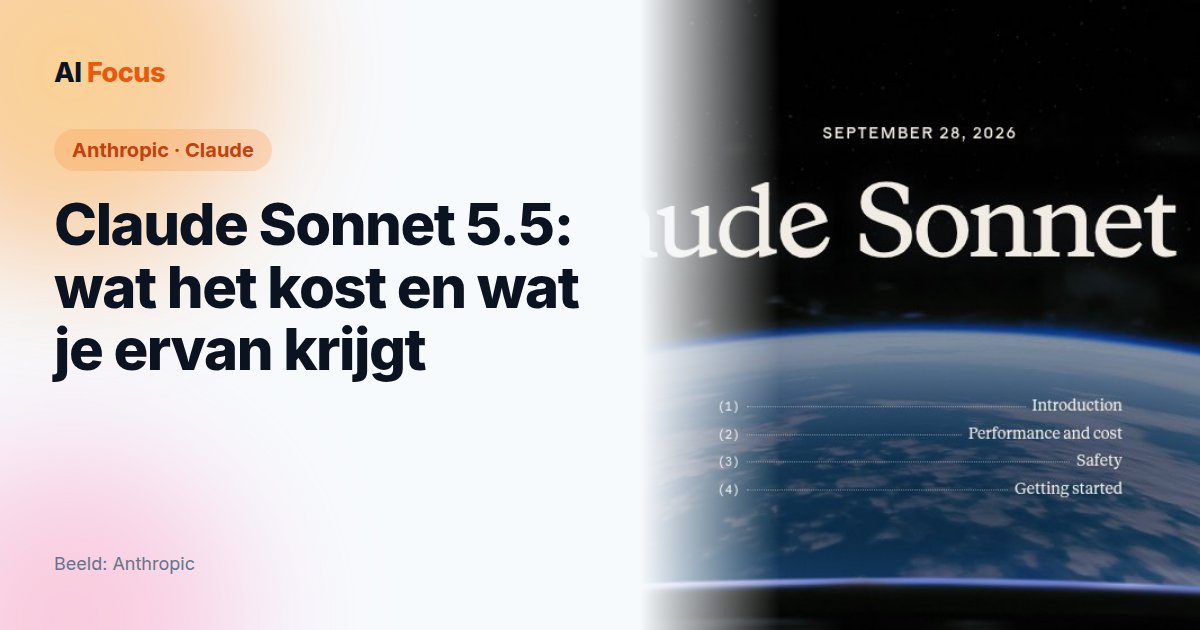
Six days after Opus 5.5, Anthropic is back with a second model from the new 5.5 family. On 28 September 2026, the company launched Claude Sonnet 5.5, the middle model.
The pitch fits in one sentence from the announcement: “It’s a clear upgrade over Claude Sonnet 5, runs 30%+ faster, and costs up to 30% less for most work.”
Faster, better and cheaper, then. But what does that mean for you, whether you use Claude free, have a Pro subscription or pay via the API? We checked with Anthropic itself.
What is Claude Sonnet 5.5?
Anthropic builds three weight classes. Opus is the heavy model for complex work, Sonnet the fast middle model, Haiku the cheap lightweight. According to Anthropic, Haiku 5.5 follows “in the coming weeks”.
Sonnet 5.5 is, per Anthropic, “a faster, lower-cost complement to Claude Opus 5.5”. It shines on “well-scoped everyday tasks”: bounded jobs, bug fixes, and polished documents, slides and spreadsheets. Anthropic also credits it with “a sharp eye for design”.
The jump from Sonnet 5 is sometimes large. On Terminal-Bench 4.0, a test where the model carries out programming tasks on its own in a terminal, the score jumps from 10.3% to 70.6%.
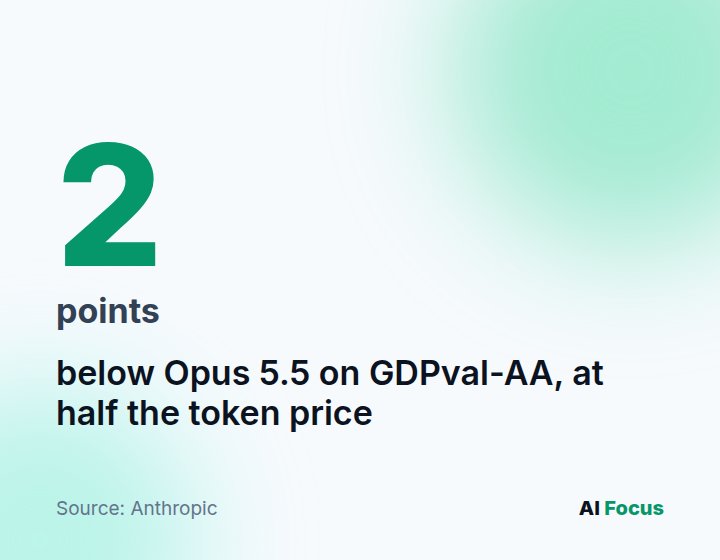
On GDPval-AA, a test with real work tasks from 44 professions and nine sectors, Sonnet 5.5 reaches 1844 points. Opus 5.5 scores 1846; Sonnet 5 stayed at 1449.
These are Anthropic’s own figures, and the company adds a caveat itself: “Opus 5.5 remains clearly stronger at complex, open-ended work requiring sustained judgment.”
What does Claude Sonnet 5.5 cost: free, Pro or API?
Free. On the Sonnet page it is put briefly: “Anyone can chat with Claude using Sonnet 5.5 on Claude.ai, available on web, iOS, and Android.” So even with a free account, you get the new model.
On the pricing page, Free shows “Sonnet: Yes” and “Opus: No”. Anthropic does not name a hard message limit: what you can do depends on conversation length, the model and which features you use.
Pro. Pro costs $20 a month, or $17 a month billed annually ($200 upfront), excluding VAT. For that you get at least five times as much usage per five-hour session as Free, plus Opus 5.5, Claude Code and Projects. You do not need Pro just to use Sonnet 5.5.
Max. Starting at $100 a month, with 5x or 20x the usage of Pro.
One detail you will notice: in Claude’s apps and in Claude Code, Sonnet 5.5 defaults to “Medium” effort, how much thinking the model puts in. Lower answers faster, higher thinks longer and reviews its work more thoroughly. The API defaults to “High”.
API. Developers pay $2 per million input tokens and $10 per million output tokens, exactly the same as Sonnet 5. Rereading text already in cache (cache reads) costs $0.20 per million tokens, a tenth of the normal input price. With batch processing, you pay half.
The model ID is claude-sonnet-5-5, and the model also runs on AWS, Google Cloud and Microsoft Azure. The context window, how much text the model holds at once, is 1 million tokens.
All subscriptions for Claude, ChatGPT and Gemini side by side, with European prices and VAT, live in our comparison of pricing and limits.
Sonnet 5, Sonnet 5.5 and Opus 5.5 head to head
| Sonnet 5 | Sonnet 5.5 | Opus 5.5 | |
|---|---|---|---|
| API price (input / output per million tokens) | $2 / $10 | $2 / $10 | $4 / $20 |
| Cache reads per million tokens | $0.20 | $0.20 | $0.20 |
| Speed | baseline | 30%+ faster than Sonnet 5 | slower (“moderate” vs. “fast”) |
| Terminal-Bench 4.0 (programming) | 10.3% | 70.6% | 66.4% |
| GDPval-AA (knowledge work) | 1449 | 1844 | 1846 |
| In your Claude subscription | not listed | from Free | from Pro |
| Shines at | previous gen | bounded daily work, bugs, documents and slides | complex, open work that needs sustained judgment |
Sources: Sonnet 5.5 announcement, claude.com/pricing and Anthropic’s model overview, checked on 29 September 2026. The Opus score on Terminal-Bench is at the highest setting (“Xhigh”).
Note the difference between price per token and price per task. The token price stays the same. The savings come because, according to Anthropic, Sonnet 5.5 needs “far fewer tokens” for the same work: “In our testing, it costs up to 30% less per task than its predecessor.”
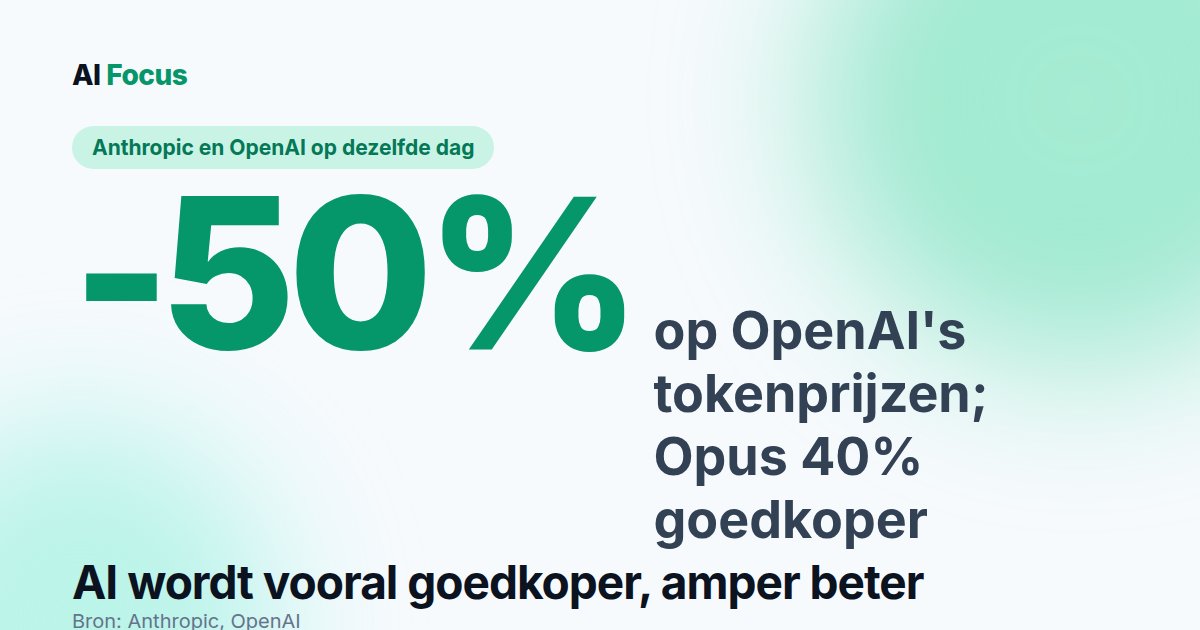
This fits what we saw last week with Opus 5.5 and GPT-6: the fight is over what a task costs. Only here the sticker price stays the same and just the bill per task goes down.
Sonnet 5.5 or Opus 5.5: when do you choose what?
Choose Sonnet 5.5 for work where you know upfront how the result should look: rewriting an email, hunting a bug, laying out slides to a template, cleaning a spreadsheet. Speed matters there, and the gap with Opus is smaller.
Choose Opus 5.5 when the task is vague or big: working out a strategy, restructuring a codebase, something where the model itself needs to find the right questions. That is where Opus is still “clearly stronger”, according to Anthropic.
A tester from Creator summed up the division of labour for a game nicely: let Opus set the architecture, then he is comfortable handing the build to Sonnet.
One limit you might hit: Sonnet 5.5 is the first Sonnet with extra safeguards around cybersecurity. Regular software development works fine, but “higher-risk cybersecurity tasks will visibly fall back to Sonnet 5”. Ask something in that area and you will visibly get an answer from the older model.
Our take: the middle model edges toward the top
A two-point gap on knowledge work, at half the token price. For much of what people do daily with Claude, the gap between Sonnet and Opus becomes small. That is good news for free users: you get a model that, on Anthropic’s own tests, sits just below the top.
The strongest counterargument: these are numbers Anthropic published itself. Artificial Analysis did run the knowledge-work tests externally, but on a test version with a bug. Anthropic expects the bug to depress the score slightly rather than inflate it. Independent measurements on the final version are still to come. And benchmarks measure bounded tasks, exactly where Sonnet shines.
Still, the direction fits what we have seen in recent weeks: the race is no longer just who builds the smartest model, but what a task costs. Anthropic is not cutting the sticker price; it is cutting costs with a model that uses fewer tokens.
What does that mean for your choice? If you use Claude now and then to write or look something up, the free version has become a lot more interesting since 28 September. With Pro you are mostly paying for Opus 5.5, Claude Code and more room. Unsure? Spend a week free with Sonnet 5.5 first. Keep hitting your limit or miss Opus? Then you know what you are paying for.
Update 30 September 2026: one day after Sonnet 5.5, OpenAI launched GPT-6.1 Sol at exactly the same API price of $2 and $10 per million tokens. Our comparison shows where the two differ and which one to pick.
Update 8 October 2026: on 7 October, Claude Haiku 5.5 followed, at $0.10 input and $0.50 output per million tokens for prompts up to 100,000 tokens, which Anthropic says is 90% cheaper than Haiku 4.5. The same day, Anthropic halved the cache reads on Sonnet 5.5 to $0.10 per million tokens. Read all current Claude prices in our pricing guide.