
Syensqo scales PFAS for AI: the footprint that never fades
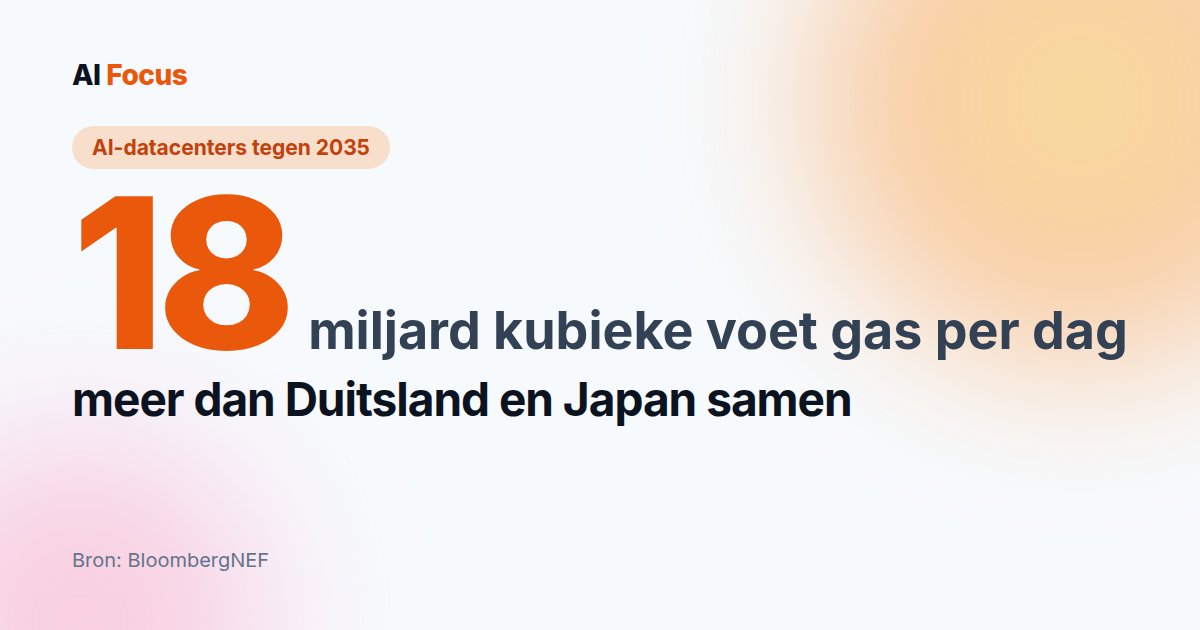
First came the electricity, then the scale, and now the chemistry. In this series on the physical underbelly of AI, we’ve already calculated how much gas American data centers will soon burn through, and let Al Gore put that panic in perspective. Part three hits closer to home. Syensqo, the Belgian chemical company spun off from Solvay in 2023 and headquartered in Brussels, is ramping up production of PVDF and PFPE. These are so-called “forever chemicals” or PFAS: substances that don’t break down in the environment and accumulate there. They’re used, among other things, to cool data centers and in the manufacture of AI chips, according to VRT NWS on September 20, 2026.
What Syensqo is actually expanding
The expansion has two parts, both outside Belgium. In the U.S. state of Georgia, Syensqo is building a factory for PVDF, a substance it sells under the brand name Solef, intended for electric vehicle batteries. When it opens in 2027, it will become North America’s largest PVDF factory. The same substance can also be used in semiconductor manufacturing, the chips driving the AI race. The company is also investing in PFPE production at its facility in Spinetta Marengo, Italy. That chemical is used for liquid cooling in data centers: servers that aren’t cooled with air or water, but submerged in liquid chemicals. In a statement to VRT NWS, Syensqo noted that over the past years it has also innovated by phasing out PFAS in some manufacturing processes.
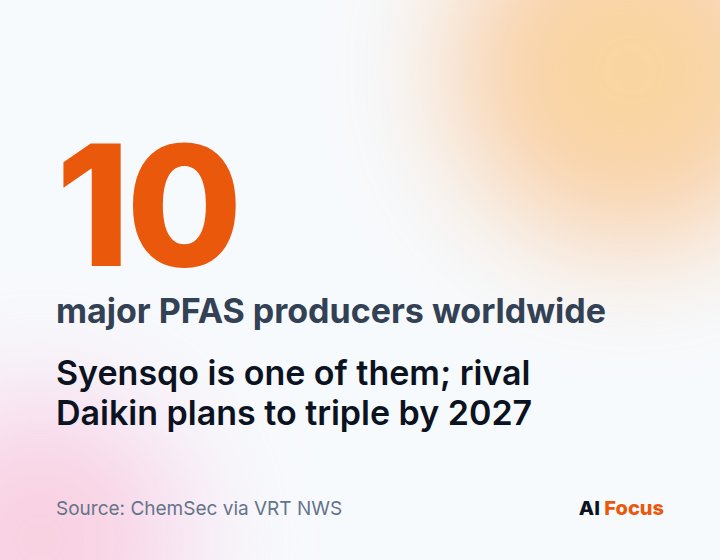
Syensqo is no minor player in this space. Swedish environmental organization ChemSec dug into the expansion plans of the world’s ten largest PFAS producers, and one Belgian multinational is on that list: Syensqo. And the competition sees the same market opportunity. Japan’s Daikin wants to triple its PFAS production by 2027. Chemours, the world’s largest PFAS producer and a U.S. company, developed a new PFAS called Opteon 2P50 that, in the company’s own words as quoted by VRT NWS, is meant to help “revolutionize” what it calls “the new era of computing power, driven by AI.”
The industry splits: exit or scale up
Interestingly, part of the sector is moving in the opposite direction. German chemical maker BASF is phasing out all PFAS production by 2028. And 3M, which faced lawsuits in Belgium and elsewhere over PFAS pollution, shut down its entire PFAS operation at the end of 2025. The chemical industry is clearly picking sides: those getting out and those scaling up for the AI boom.
| Company | What it’s doing |
|---|---|
| Syensqo (Belgium) | Building North America’s largest PVDF factory in Georgia, U.S. (opens 2027) and ramping up PFPE production for server cooling in Spinetta Marengo, Italy |
| Daikin (Japan) | Wants to triple PFAS production by 2027 |
| Chemours (U.S.) | World’s largest PFAS producer, betting on AI demand with Opteon 2P50 |
| BASF (Germany) | Phasing out all PFAS production by 2028 |
| 3M (U.S.) | Stopped PFAS production at end of 2025 |
This split is more than a footnote. Companies that exit leave a growing market for those who stay. And the AI demand makes that market too lucrative to leave on the table: every new server hall needs cooling, every new chip factory needs the chemistry. Companies that are scaling up aren’t doing it in spite of the PFAS controversy, they’re doing it because, despite that controversy, a customer is lining up.
”Some are toxic, some are greenhouse gases”
Why do data centers reach for this chemistry? Because it solves a different problem. The sector has been under pressure for years over its enormous water consumption, and PFPE liquid cooling saves significant amounts of water and energy compared to traditional cooling. On paper, it looks like the green choice. Lenny Siegel, director of Chips Communities United, cuts through precisely that framing in the VRT article, as quoted by VRT NWS:
“That’s why companies try to paint themselves as the good guys by using alternative forms of cooling. But they’re not telling the public that they’re using dangerous chemicals. Some are toxic, some are greenhouse gases, and some are both.”
That’s the core of it. The water and energy savings are real, but they come at the cost of substances that break down extremely slowly and accumulate in the environment. You can shut down a gas plant eventually, you can upgrade an overloaded grid. PFAS, once in soil or water, never goes away. That’s a different kind of footprint: not a counter you can turn back, but a line drawn that stays there.
Our take
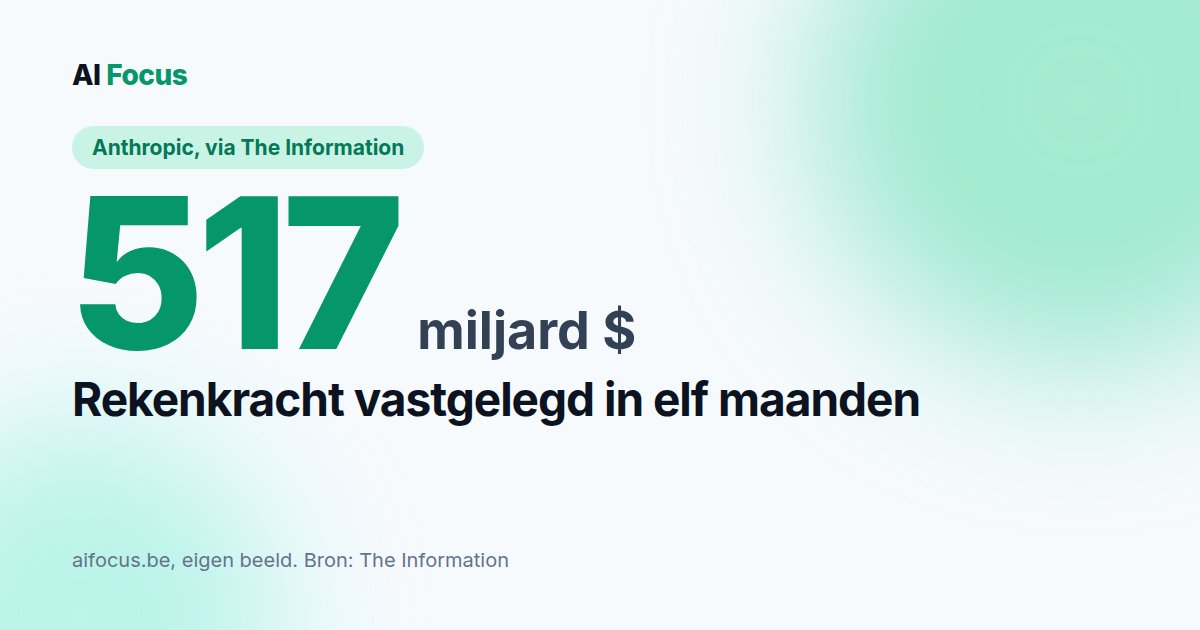
This series started with the electricity: data centers that will soon burn through more gas than Germany. Part two brought Al Gore’s scale correction, which tempered the emissions panic but flagged the methane turbines as a lasting concern. This third installment shows how AI’s footprint is shifting: from visible to invisible. A gas plant you can see standing there, a consumption figure you can publish. Chemistry that lasts forever in the environment, you only see once it’s too late. And the scale grows with the race itself: the computing-power contracts that climbed to half a trillion dollars in eleven months eventually become gigawatts, and every one of those gigawatts needs cooling too.
For Flemish readers this isn’t a distant problem. We already know all too well what PFAS pollution does to a region and its people; the fact that a Belgian company is now ramping up production of these chemicals for the AI market deserves more than passing attention here. The production expansions themselves are in the U.S. and Italy, not at home, but the demand underneath them is universal. If you’re buying AI or cloud capacity, you already had one question on your checklist: where does the electricity come from? Now there’s a second one: what cools it? As long as suppliers don’t answer that second question themselves, asking it is doubly worthwhile.