
Al Gore: the AI energy panic targets wrong threat
The AI industry has taken a hard hit on the energy front in recent months: data centers burning gas, grids straining under the load, neighbors showing up at planning meetings to object. That’s precisely why it’s striking who’s now pumping the brakes on the panic. Al Gore, the man who put climate on the world’s agenda with An Inconvenient Truth, gave an interview to TechCrunch on September 16, 2026 with a message you might not expect from him: AI data center emissions are real, but small compared to what the world is already polluting. He gave the interview alongside Lila Preston, head of growth equity at their investment firm Generation Investment Management.
This isn’t a new turn. Back in May 2026, Gore called the rise of AI data centers “cause for deep concern, but not panic”. This week’s interview tightens that point and shifts focus from the smokestack to something else.
A fraction of what landfills already release
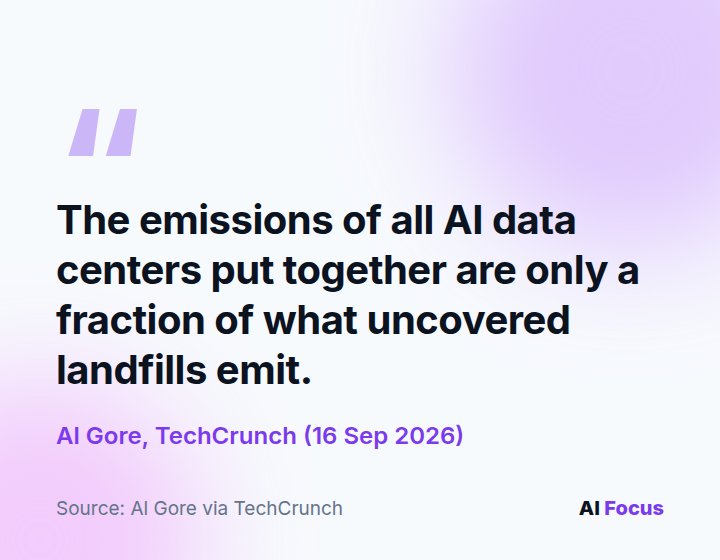
Gore’s case rests on a comparison. Add up the emissions from every AI data center in the world, he says, and the total is just a fraction of what open, uncovered landfills worldwide pump into the air. That’s not a free pass, it’s a scale check: if you’re spending your outrage on data centers, you might be looking away from sources that are already much bigger.
For a blog that just yesterday calculated how much gas those data centers will burn, that’s an uncomfortable but useful counterpoint. The numbers from our gas post still hold. What Gore adds is proportion: a growing source alongside existing sources that are still larger. Both things can be true at the same time.
The real risk lives in model behavior
Where Gore actually loses sleep isn’t from a meter but from the models themselves. The warnings he takes seriously come from inside the AI industry: people at OpenAI and Anthropic raising alarms about where this is heading. That’s notable because these same insiders get laughed off the stage at the top. At a conference in Los Angeles, President Trump and Nvidia CEO Jensen Huang mocked the AI safety advocates. Trump called the plea from Anthropic’s Dario Amodei to slow down, backed by Sam Altman and Elon Musk, even a “hoax”.
Gore adds a second layer. According to him, the growing, bipartisan opposition to data centers across the U.S. is only partly about CO2. Below the surface sits something else.
“I think that part of the reason for the growing bipartisan opposition to data centers in so many parts of the U.S. is being driven by the underlying concerns about job losses and some of the other threats that experts inside OpenAI and inside Anthropic have been trying to alert the public to.”
In other words, part of the reason for growing resistance to data centers in the U.S. is driven by underlying fears of job losses and the other threats that experts inside OpenAI and Anthropic are trying to warn the public about. The neighbor objecting at a planning meeting might be protesting automation just as much as the smokestack. That same week, EU President von der Leyen put model behavior center stage rather than data centers. Two very different voices, same shift: from infrastructure to what the models actually do.
| Where panic focuses | Where Gore sees the real concern |
|---|---|
| CO2 emissions from AI data centers | Warnings from inside the industry itself, at OpenAI and Anthropic |
| Servers straining the grid | Job losses and automation fears behind neighborhood opposition |
| Data centers as an abstract climate monster | New methane turbines that lock in fossil fuel dependency for decades |
The one concern that sticks: the gas valve
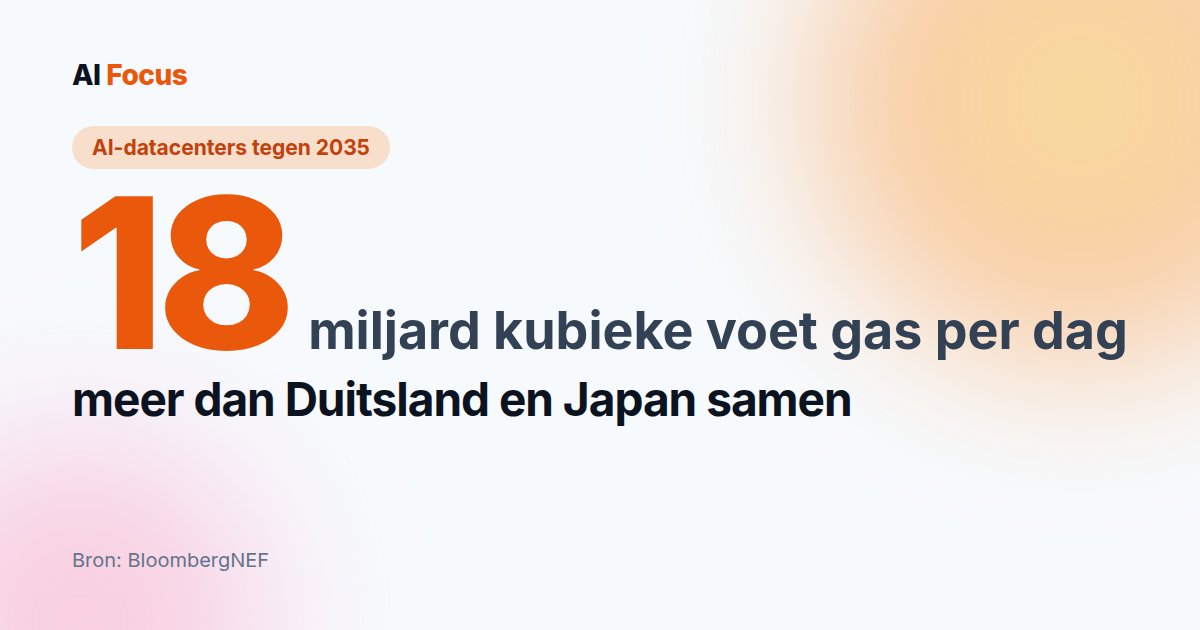
Still, Gore doesn’t brush the energy question off the table entirely. There’s one concrete environmental concern he keeps, and it lines up exactly with what we described yesterday. Some big tech companies are installing new methane turbines to power their data centers, and building such gas plants can lock in fossil fuel dependency for decades. A turbine you put down today doesn’t run for one year, it runs a generation.
That’s exactly the gas valve from our gas post from yesterday, where Meta, Microsoft, Google and Amazon all announced their own gas plants. And it ties to the computing power race: we wrote earlier that Anthropic signed contracts for up to half a trillion dollars in computing power in eleven months, and all those contracts ultimately become gigawatts. Gore and our gas post point to the same place. The difference is in the weighting: while panic treats the entire data center sector as a climate problem, Gore isolates the part that actually matters, the infrastructure you can’t undo.
Our take
A climate veteran who damps down the AI energy panic isn’t an ally of those wanting to sweep AI’s footprint under the rug. Gore says something sharper: you’re targeting the wrong thing. The emissions are real but modest next to existing sources, the big risk lives in model behavior and the jobs they touch, and the one environmental concern that sticks is the gas lock-in. That doesn’t contradict our gas post from yesterday, it sharpens it. His one concrete worry, the methane turbines, is exactly the gas valve we described. So the lesson isn’t “energy doesn’t matter,” but rather: don’t treat it as the story and don’t let it drown out the industry’s own warnings. Anyone using or investing in AI can hold both at once: factor in the energy bill, and listen to the people building the models who say it’s moving too fast.