
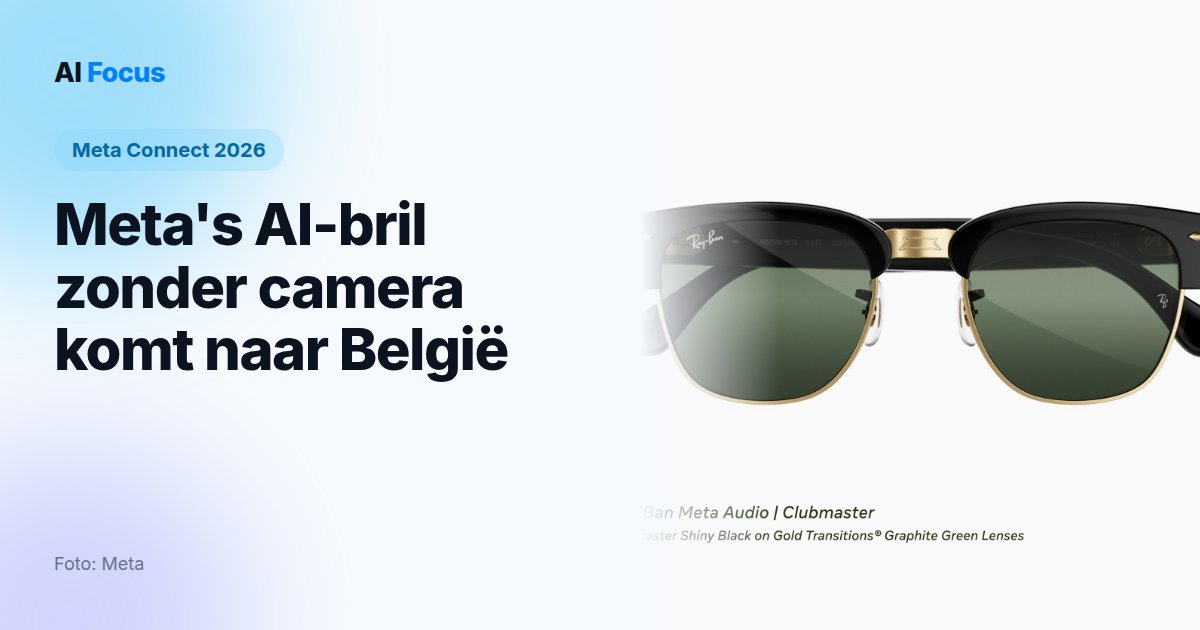
Ray-Ban Meta Audio: Meta’s camera-free glasses for €349
Meta has unveiled smart glasses that deliberately cannot do one thing: film. The Ray-Ban Meta Audio is Meta’s first pair of AI glasses without a camera, and it is coming to Belgium on October 13, for €349. Meta presented it in its announcement at Meta Connect on September 23; the Belgian and Dutch price and release date come from Tweakers, the background from TechCrunch. Thinking about buying a pair? Here is what they can do, what they cannot, and what to watch out for.
What is the Ray-Ban Meta Audio?
In short: glasses with earbuds built in, plus an AI assistant. The arms hold microphones and speakers. With them you listen to music and podcasts, make phone calls, have spoken language translated and talk to Muse, Meta’s AI assistant. What is missing is the camera. So you cannot take photos or videos, and the glasses cannot “look” at what you see either.
Meta made them together with eyewear giant EssilorLuxottica, the company behind Ray-Ban. A few practical points:
- Weight: 43 grams. According to Meta, its lightest and slimmest glasses so far. For comparison: the Gen 3 with camera weighs at least 51.5 grams.
- Battery: up to 12 hours, plus up to 48 extra hours with the included charging case.
- Fit: adjustable arms, interchangeable nose pads and hinges that open a little wider, so they fit more heads well.
- Prescription lenses: possible, so you can also wear them as your everyday glasses.
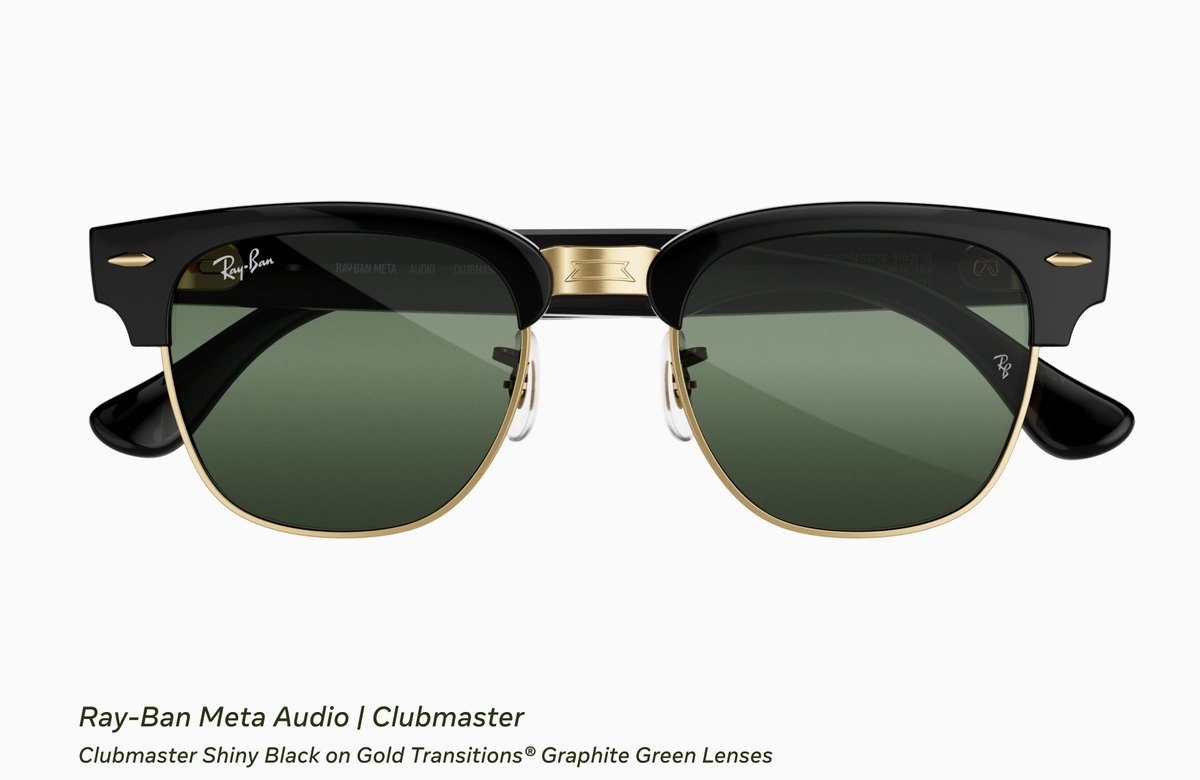
- Frames: two new models, the retro Clubmaster and the classic rectangular Burbank, in 23 combinations of colour and lens.
Price and release in Belgium
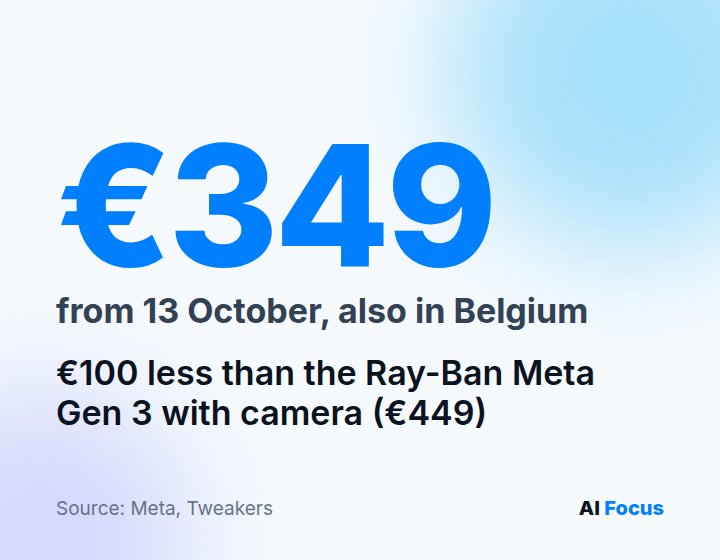
In Belgium and the Netherlands, the Ray-Ban Meta Audio costs €349. It goes on sale on October 13. In the United States you can already pre-order it, from $349, with delivery on the same date.
At the same time, Meta announced a new version of its glasses with a camera, the Ray-Ban Meta Gen 3. That one is available right away, for €449. Side by side:
| Ray-Ban Meta Audio | Ray-Ban Meta Gen 3 | |
|---|---|---|
| Price in Belgium | €349 | €449 |
| Camera | No | Yes, 12 MP, 3K UHD video, with recording LED |
| Weight | 43 grams | At least 51.5 grams |
| Battery | Up to 12 hours (plus 48 hours with charging case) | Up to 9 hours (was 8) |
| Frames | Clubmaster, Burbank | Wayfarer, Aviator (new), Zena (new) |
| Available | From October 13 | Now |
The Gen 3 also gets a thinner frame and six microphones. For both models, Muse is coming to Meta’s AI glasses as a personal agent: an assistant that takes tasks off your hands and turns goals into plans, all hands-free.
Why Meta left out the camera
Meta’s camera glasses have drawn plenty of criticism in recent years, because you could film people with them without their noticing. Some even called them “pervert glasses”. Meta had already tried to address that with an update that disables the camera if someone tampers with the recording LED. The new model is meant to take that concern away, Tweakers writes, and according to TechCrunch that is exactly what could make the glasses more popular.
Mark Zuckerberg himself puts the sound front and centre: “Once you get used to high quality audio, it’s just a thing that you want all the time, right?” TechCrunch also sees it as a response to Apple, which plays on the same field with AirPods and Siri: audio and an assistant in your ear.
Privacy: less camera, not fewer questions
For the people around the wearer, this is a genuine improvement. Nobody has to wonder whether the glasses across the table are filming them. But the privacy question does not disappear, it moves. The glasses still have microphones, and the assistant you talk to through them is Muse.
That is the same Muse that, as emerged this week, had some phone calls handled by people in a call centre during an internal test of its calling feature, without it being clear when. Meta promises clear notices before the public rollout. It is also the same Muse that Amazon is shutting out. If you put glasses with an always-available assistant on your nose, you would do well to know what that assistant does with your questions and who gets to see them. We asked the same question earlier about the Apple Watch that listens in: a microphone is less noticeable than a camera.
Who is it for (and who is it not for)
A good fit if:
- you already wear glasses and like to make calls or listen to music or podcasts hands-free, without putting in earbuds;
- you want lightweight smart glasses without the awkwardness (for yourself and the people around you) of a camera on your nose;
- you find speech translation handy when travelling.
Less of a fit if:
- you mainly want to take photos or videos from your own point of view: then the Gen 3 with camera is the model for you, for €100 more;
- you are mainly after an AI assistant: your phone already has one, and you do not need to spend an extra €349 for it;
- you are wary of microphones and of an assistant that is not always clear about who is on the other end.
Our take: the Ray-Ban Meta Audio is a smart move. Meta is finally taking a real privacy problem seriously, covertly filming others, and it is mainly the people around the wearer who benefit. But the privacy question moves, it does not disappear: the microphones remain, and the assistant is the same Muse that, as emerged this week, had people behind some “AI conversations” during an internal test. For €349 you are essentially buying AirPods in a glasses frame, with an AI assistant thrown in. Interesting if you already wear glasses and like to call and listen hands-free. If you are mainly after AI, your phone does the same job.
Update 11 October 2026: Norway wants to temporarily ban camera glasses from places such as parks, beaches and schools. What you are allowed to film with camera smart glasses in Belgium, and what you can do if someone films you, is explained in our guide to smart glasses with a camera in Belgium.