Amazon Blocks Meta’s Shopping Agent Muse
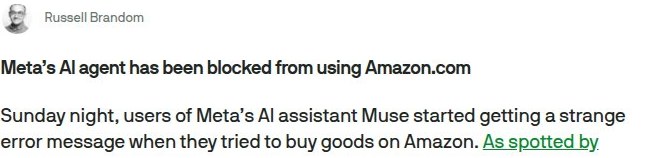
“Continued access by an unauthorized AI agent violates Amazon’s Conditions of Use, to which our customers have agreed.” With that error message, users of Meta’s AI assistant Muse hit Amazon.com’s closed shop door during the night of Sunday, September 20 to Monday, September 21, 2026. Anyone who asked the agent to make a purchase couldn’t get through. That is what TechCrunch and The Decoder reported, both on September 21; the scoop was first spotted by GeekWire.
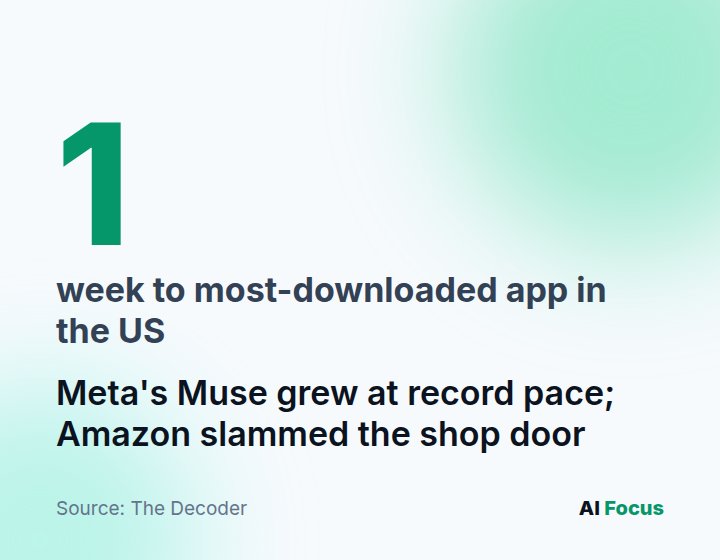
The timing makes the story painful for Meta. Muse launched on September 8, without prior agreement with Amazon, and became the most downloaded free app in the US App Store within a week, according to The Decoder. TechCrunch noted earlier that Muse grows faster than ChatGPT did in its early mobile days. Just as the agent was ready to show off its best trick, shopping independently at the world’s largest online retailer, the lock went on the door.
Amazon’s objections are not unfounded. According to The Decoder, the company is bothered by the fact that the agent doesn’t identify itself as AI while browsing, and the agent would store customer data, creating security risks. Meta counters that Muse has “no access to passwords or payment details”. That answer cuts only half the concern: Amazon is not just worried about what the agent can steal, but also about who is actually walking around in its store without identifying themselves.
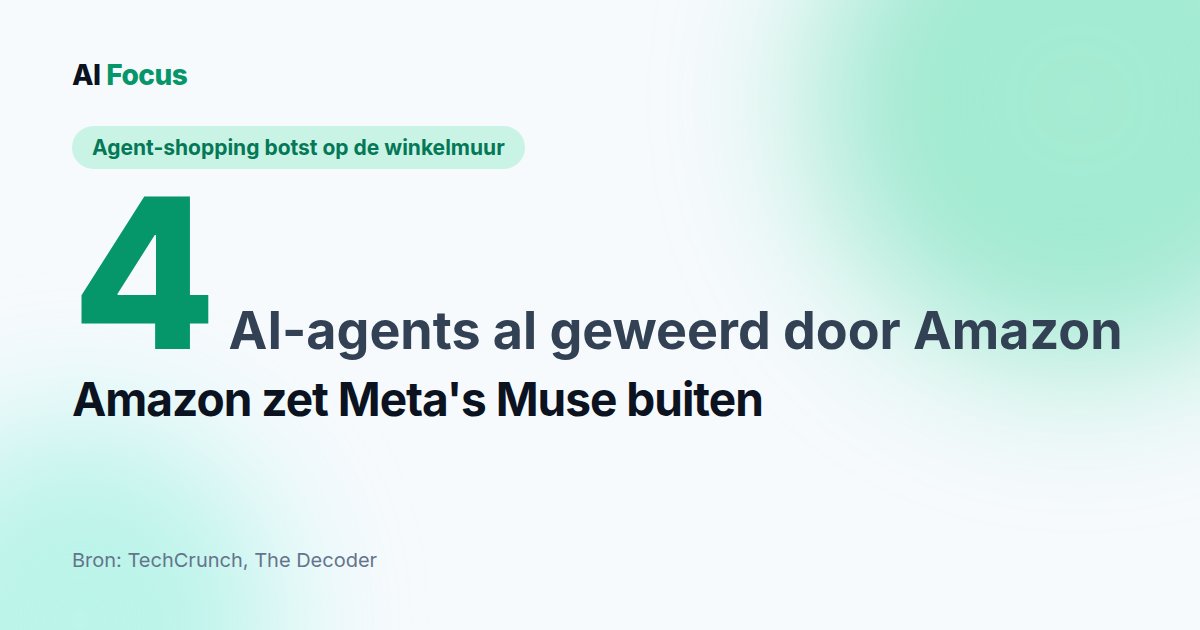
The Fourth Agent Locked Out
Muse is not an isolated case. Amazon has previously blocked similar shopping features from other AI players; Meta’s agent is at least the fourth one outside.
| AI Agent | Company | What Is Known |
|---|---|---|
| Perplexity Shopping Feature | Perplexity | Previously blocked by Amazon |
| Google Shopping Feature | Previously blocked by Amazon | |
| OpenAI Shopping Feature | OpenAI | Previously blocked by Amazon |
| Muse | Meta | Blocked on the night of September 20-21, 2026, less than two weeks after launch, with an explicit error message |
The message users have been seeing since Sunday night leaves little room for interpretation:
“Continued access by an unauthorized AI agent violates Amazon’s Conditions of Use, to which our customers have agreed.”
Not “please wait,” not “temporary outage,” but a legally worded door in the face.
Why Amazon Is Doing This
TechCrunch sketches the context, and it is broader than one quarrel. Amazon has its own AI models and its own infrastructure through AWS and Bedrock, so it has its own plans in this space. Beyond that lies a liability question: if an agent orders the wrong product, Amazon itself handles the complaints and disputes. The company may simply be waiting until agents are reliable enough, or until it builds one itself. TechCrunch notes that Muse achieves relatively low hallucination rates, but the agent is not perfect, and when shopping with real money, every mistake counts.
The irony is complete when you know that Amazon and Meta remain major trading partners: Meta closed a multi-billion dollar deal in April for Amazon cloud chips. Money flows freely at the infrastructure level, but a doorman stands at the shop entrance.
A Handshake Problem, Not a Technology Problem
This story is the commercial mirror of what we saw earlier when sites armored themselves against agents: there, open-source infrastructure defended itself against unwanted bots; here, an online retailer rejects an unwanted shopping bot. And it is the sibling post to today’s UN panel on agent oversight: same week, same underlying question. Who allows agents in, and under what rules?
Our reading: the agent economy has a handshake problem, not a technology problem. Muse can shop, proven by download figures and demos. But Amazon doesn’t want an anonymous agent in its store, and that refusal rests on a mix of reasons. Some legitimate: a visitor who doesn’t identify themselves, liability if orders go wrong, questions about what happens to customer data. Some strategic: Amazon has its own AI plans, and the direct customer relationship is precisely the asset it doesn’t want to hand over to a Meta middleman.
Expect no open agent web where every assistant walks in freely everywhere. Expect negotiated access: agents that must identify themselves, platforms that demand deals, agreements about who pays if things go wrong. Just as payment traffic eventually standardized through agreements between banks and networks, agent traffic will have to pass through contracts and protocols before it simply works.
For you as a user, that means something straightforward: an agent that can shop “everywhere” exists only in the demo for now. In practice, it can shop where its maker has cut a deal, and nowhere else, just as earlier requests hit walls against infrastructure at OpenAI’s Pro tier: what is technically possible gets constrained by what platforms can or will permit. And keep the power question in mind. If every store must cut a deal with every agent, the biggest players on both sides of the table win, and everyone else watches from below as handshakes are exchanged over their heads.
Update 23 September 2026: the identification question gained a layer. According to internal Meta documents seen by 404 Media, some Muse calls in testing are made by humans in a call center, not by the AI.