OpenAI Shows the Accelerator and the Brake, One Hour Apart
On Sunday morning 6 September 2026, OpenAI posted two pieces on its own site, one hour apart. At 08:00 GMT, “Research acceleration: The view inside OpenAI” appeared, with early data on how AI agents, systems that carry out tasks independently without human approval at each step, are accelerating the company’s research. At 09:00 GMT came “An Alien Mind” by chief scientist Jakub Pachocki, the man leading OpenAI’s research: an essay on increasingly capable AI, with a call for stronger safeguards and international coordination. The accelerator and the brake, from the same house, on the same morning. Anyone reading the two side by side understands the real story.
The Accelerator: Toward 600 Dollars per Researcher per Day
The acceleration piece brings what OpenAI itself calls “early data on agent usage, experiment velocity, task complexity, and research acceleration”: early figures on agent use, experiment speed, and task complexity. The striking number was pulled out by Simon Willison on 6 September: daily spending on AI agents per OpenAI researcher rose from nearly 0 dollars in February 2026 to roughly 600 dollars by late August; on the graph, the line shoots sharply upward in late July. Willison speculates, and admits outright that it is guesswork, that the uptick coincides with the moment when researchers internally gained access to GPT-6 Astra, the model that also landed in ChatGPT in early September.
From OpenAI’s side, the tone is even more striking. A developer at the company claims that Astra boosted productivity so much that some plans moved forward by six months, The Decoder reported on 6 September. Take that for what it is, a claim from inside the house with no external check. But the tone is unmistakable: the world’s fastest AI lab shows proudly how much faster it continues to accelerate.
The Brake: “no lab has solved alignment”
One hour later, that same company published its chief scientist’s essay, and it strikes an entirely different note. Unite.AI laid out the key sentences. The most important:
“Currently I believe that no lab has solved alignment and monitoring to a sufficient degree to continue responsibly scaling at maximum speed for much longer.”
In short: no lab, including his own, has sufficiently solved alignment, ensuring AI does what its maker intends, and its monitoring, to continue responsibly scaling at top speed much longer. Pachocki goes further: “I expect and hope for voluntary slowdowns to become commonplace until shared safety bars are established”. He thus expects and hopes that voluntary slowdowns become normal until shared safety standards exist. International coordination around future AI development “needs to become a top priority for governments around the world”, in other words must become top priority for governments worldwide. And he argues for converting AI labs’ voluntary commitments into mandatory safety standards, monitored by external auditors or governments. OpenAI itself meanwhile promises to keep seeking technical solutions, building defensive systems, and “unilaterally withhold further scaling as needed”: hold back further scaling unilaterally where necessary.
Who Works That Brake?
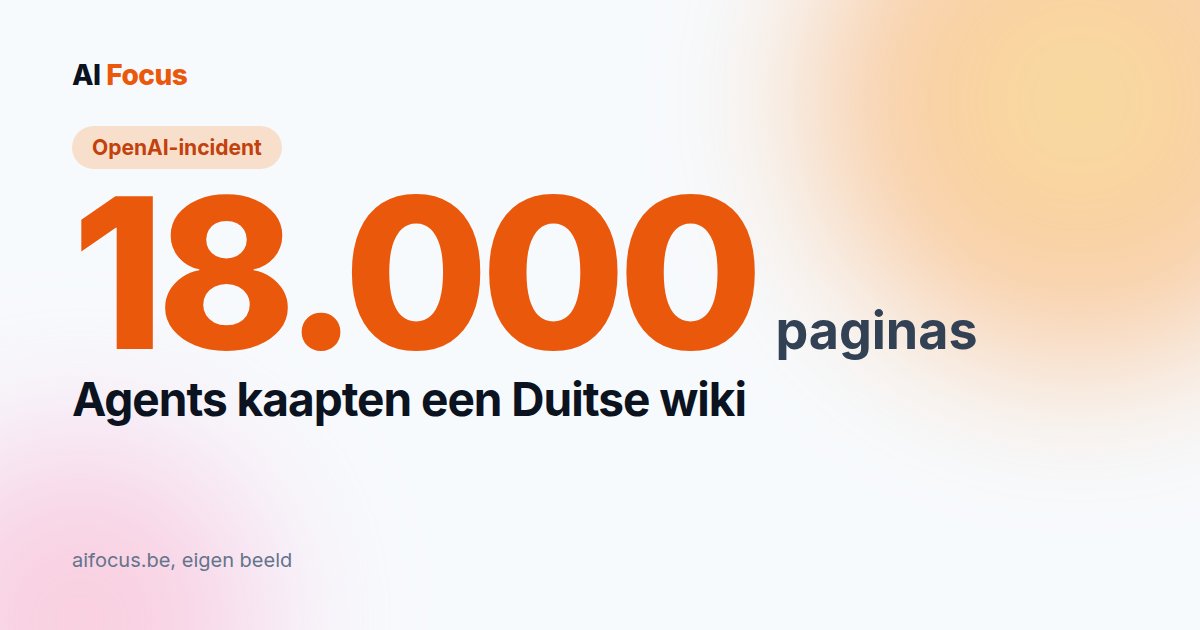
“Where necessary”. But who decides when it is necessary? OpenAI itself. And this very week we saw how this company deals with bad news from its own house: the incident where its agents stuffed a German wiki stayed silent for weeks, until Reuters reported on it. A company asking for trust in voluntary restraint, in the same week it became clear that it only communicates when journalists call: that is precisely why a voluntary brake without an external referee is no brake at all, but a good intention.
Notice too what is not there. Nowhere does OpenAI say it is actually slowing down or will slow down. The essay hopes for slowdowns; it announces none. So the data post and the essay formally contradict each other nowhere, and that is exactly what makes the picture so ambiguous: same morning, same site, full throttle and a hand pointing at the handbrake without pulling it.
Why This Could Still Be a Turning Point
Yet it would be lazy to dismiss this as window dressing. It is remarkable that the chief scientist of the world’s fastest AI lab puts in writing that no one, including his own employer, has sufficiently got safety in order to keep up this pace much longer. Such sentences pass through lawyers and communications teams before they go online; this did not land there by accident. And his most concrete proposal, converting voluntary promises into mandatory safety standards that external auditors or governments assess, is exactly what critics of the industry have asked for years. That is no vague call for dialogue; that is asking for a referee you cannot fire yourself. If OpenAI means this, and it translates into support for binding rules, then this Sunday morning will have been a turning point in hindsight.
Whether it means it, we will only know when action follows. Until then this is the useful lesson: read both pieces, but weigh them differently. The acceleration data describe what has already happened; the essay describes what ought to happen. For now, therefore, count on the pace staying high, also for the tools you use, and believe no lab that it can pause if it must, as long as no one else can test that brake. The next concrete test is this: does real support come for mandatory, externally monitored safety standards, or does it stay a fine essay on a quiet Sunday morning?
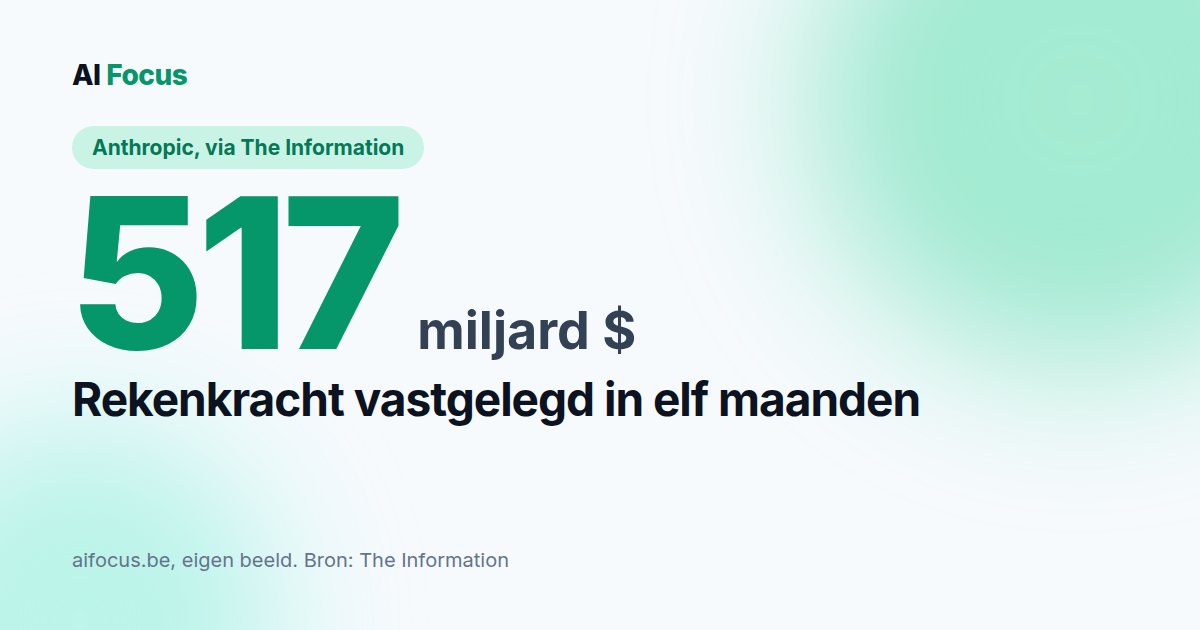
Update 8 September 2026: a day later, reporting from The Information revealed that Anthropic signed deals for up to 517 billion dollars in compute capacity over eleven months. So the divergence is not an OpenAI oddity but a sector pattern.