Apple’s New Siri Runs on Google, Not in the EU
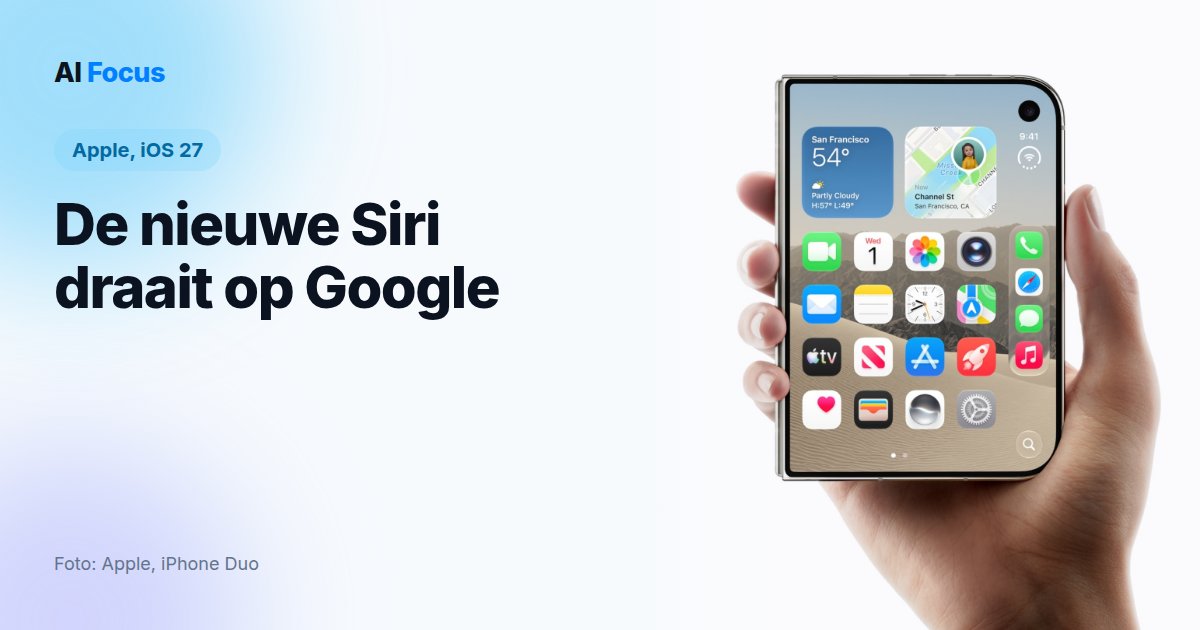
For years, “we build it ourselves” was almost a credo at Apple. The chip, the operating system, the maps: whenever possible, everything in-house and away from Google. It’s a twist of irony that the brain of the company’s most important AI assistant is now sourced from that exact rival. The refreshed Siri that Apple showcased around its September 9, 2026 event and rolled out starting September 14 with iOS 27 runs on Google Gemini. And here’s the second surprise that hits close to home: it’s precisely in the EU, and therefore in Belgium, where the new Siri won’t arrive yet.
Apple Buys Its AI Brain From the Competition
On January 12, 2026, it became known that Apple signed a multi-year, non-exclusive agreement with Google, as reported by TechCrunch. The deal lets Apple use Google’s Gemini models and cloud technology as the foundation for its own foundation models, the base models behind Apple Intelligence and Siri. According to Apple, the company tested technology from competitors OpenAI and Anthropic too, but chose Google anyway. Apple’s own explanation: “After careful evaluation, we determined that Google’s technology provides the most capable foundation.”
Estimates put the price tag around 1 billion dollars per year, but neither Apple nor Google confirmed a figure. Treat that as unconfirmed. What Google did confirm came from cloud chief Thomas Kurian, quoted by MacRumors in April: “We’re collaborating with Apple as their preferred cloud provider to develop the next generation of Apple Foundation Models based on Gemini technology.”
Your Data: A Promise, Not a Full Picture
Here’s where the brand promise gets uncomfortable. Apple has marketed itself for years as the privacy company, and Gemini comes from one of the world’s largest data collectors. Apple’s response is that your data doesn’t flow to Google: Gemini would run inside Private Cloud Compute, Apple’s own shielded server processing. But the full technical setup isn’t completely public. In April, reporting left unclear whether everything truly goes through Private Cloud Compute or if some runs on Google’s servers, and there’s mention of Apple asking Google to set up servers in Google datacenters for this. The promise is there; the full diagram is not.
What the New Siri Can Do, and Who’s Behind It
The refreshed Siri AI holds real back-and-forth conversations and thus resembles ChatGPT or Claude more than the old, clunky Siri. It starts in English; French, Japanese, Korean, Portuguese, and Spanish follow in October. There’s been a waitlist, and cloud features have daily usage limits, with a paid upgrade coming later.
Gemini isn’t the only AI in the device. Integration with ChatGPT existed before; what’s new is that Gemini now becomes the core of Siri, while ChatGPT plays a supporting role. This division of labor isn’t officially confirmed by Apple, but analysts see it this way:
| Role | Provider | Purpose |
|---|---|---|
| Core of Siri and Apple Intelligence | Google Gemini | the foundation models powering the assistant |
| Supplementary | ChatGPT (OpenAI) | complex world-knowledge questions, via existing partnership |
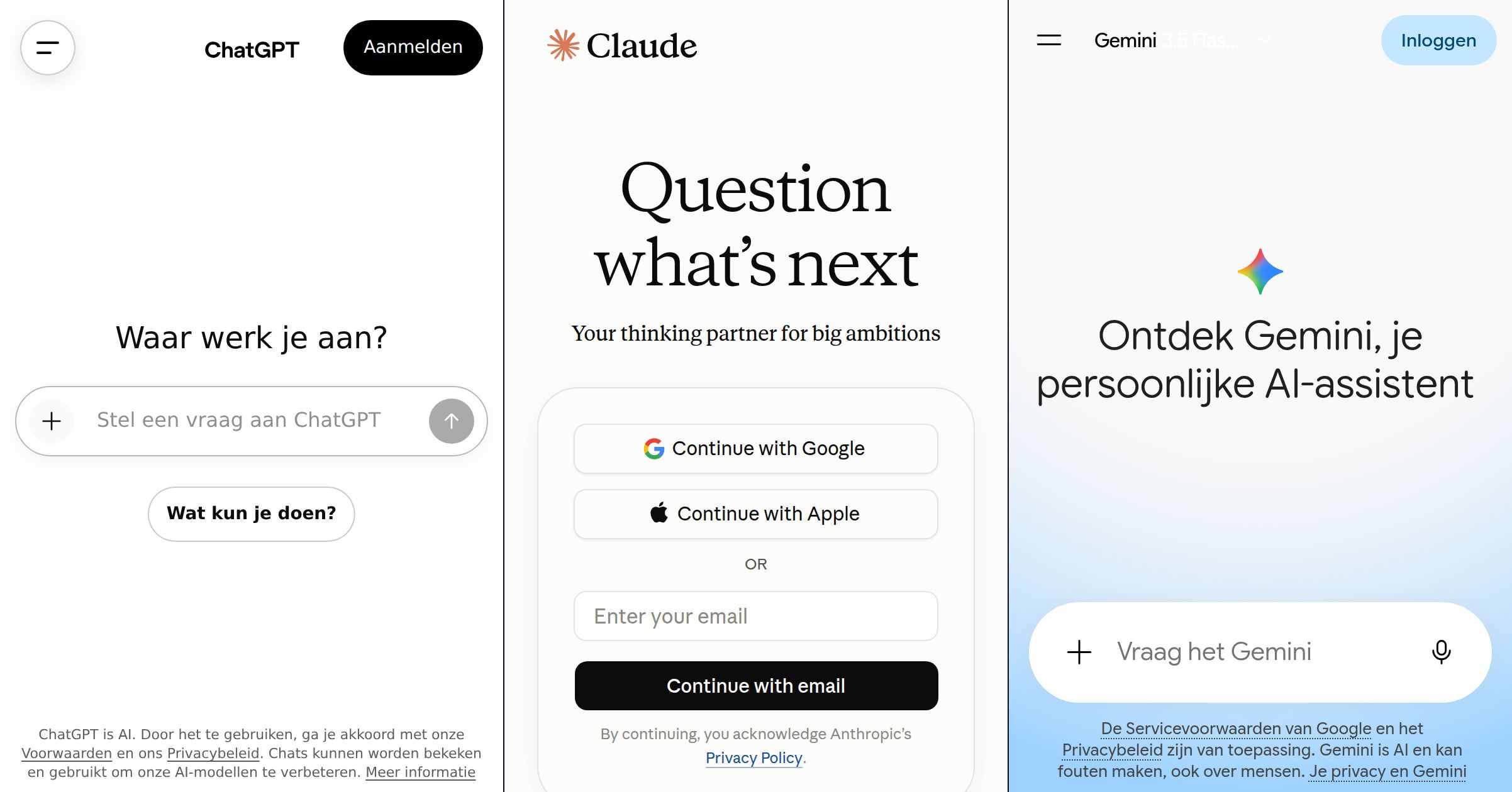
Want to see how Gemini stacks up against other players? Our comparison of ChatGPT, Claude and Gemini puts them side by side.
In Belgium, You Won’t Get the Flagship Feature
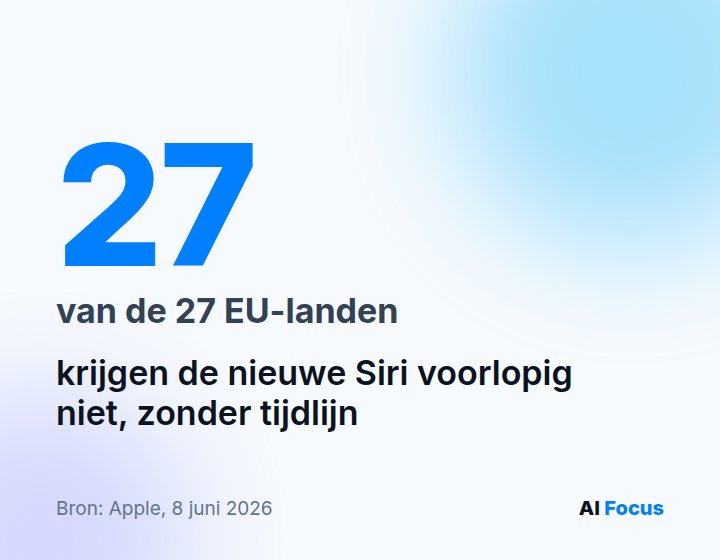
Then the bitter part for EU users. In its own press release of June 8, 2026, Apple announced that it cannot release Siri AI in the EU due to the Digital Markets Act with iOS 27 and iPadOS 27. The DMA is the European law designed to rein in the power of big tech platforms, so in theory it’s meant to protect you. The block applies to all 27 member states, including Belgium, and to iPhone, iPad, and Apple Watch. There’s no timeline.
Software chief Craig Federighi let his disappointment show in that same statement, pointing directly at Brussels:
We’re deeply disappointed that our EU users won’t have Siri AI on iPhone or iPad when we share our new software releases later this year. Our hope is to eventually bring Siri AI to the EU, and we will continue to engage with EU regulators on a path forward. However, their refusal to engage constructively on solutions that preserve privacy and security means we do not currently have a timeline for Siri AI’s availability on iOS and iPadOS in the EU.
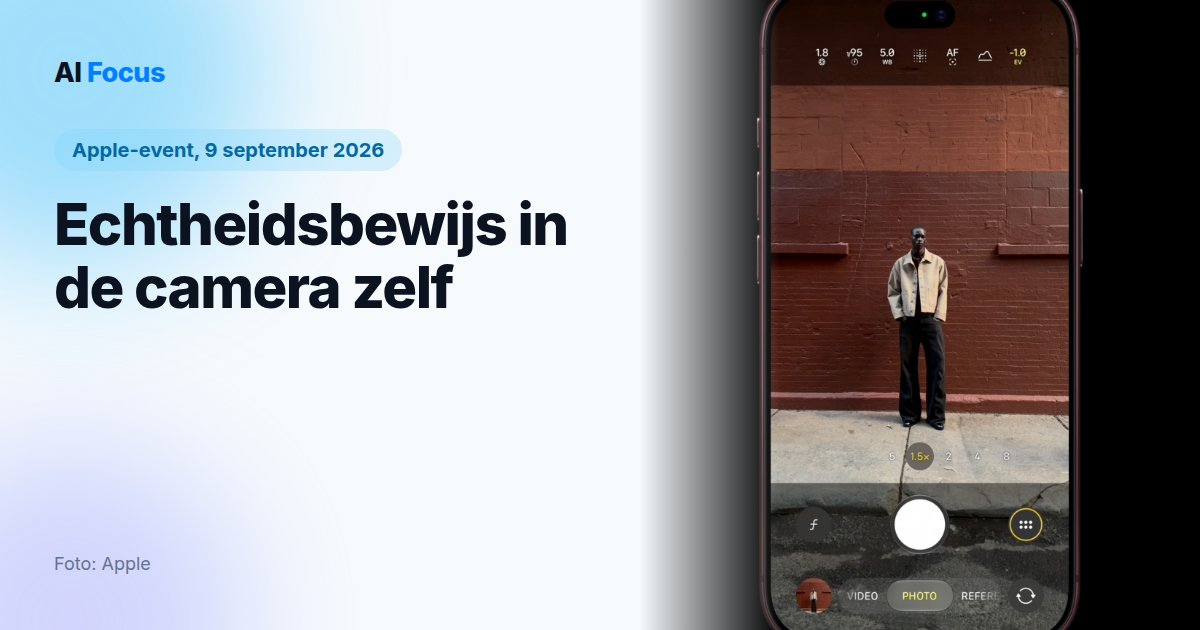
So you’ll be buying an iPhone 18 soon where the most celebrated new feature is missing. It’s not the first time Europe finds itself at the back of the queue: with Apple Reference Image, another piece of AI news from the same event, the EU already faced restrictions. By the way, Siri AI also won’t be available in China at launch.
Apple Has a Point, and Brussels Isn’t Budging Either
Anyone who pins full blame on Apple here oversimplifies. Building a frontier model yourself, an AI model at the absolute frontier, costs time Apple didn’t have; Google simply delivered the best foundation according to Apple, and an assistant that doesn’t work is good for nobody. The privacy promise is also genuinely made, even if the full blueprint is incomplete. On the other hand, anyone who blames Brussels entirely oversimplifies just as much. The DMA exists to prevent a handful of companies from locking down the digital market, and that’s no small matter. What you’re seeing here is a deadlock: Apple won’t open up what the law asks, and the regulator isn’t moving either. Federighi’s complaint about a “refusal to engage constructively” is one side of that story, not the whole thing.
What does it mean in practice? If you’re ordering an iPhone 18 soon, expect the new Siri to stand still here for now, and nobody can say when that will change. Want a high-level assistant right now? The same Gemini runs just fine on your Android device and in your browser. The engine is ready; only Apple’s logo on it is making Europe wait.