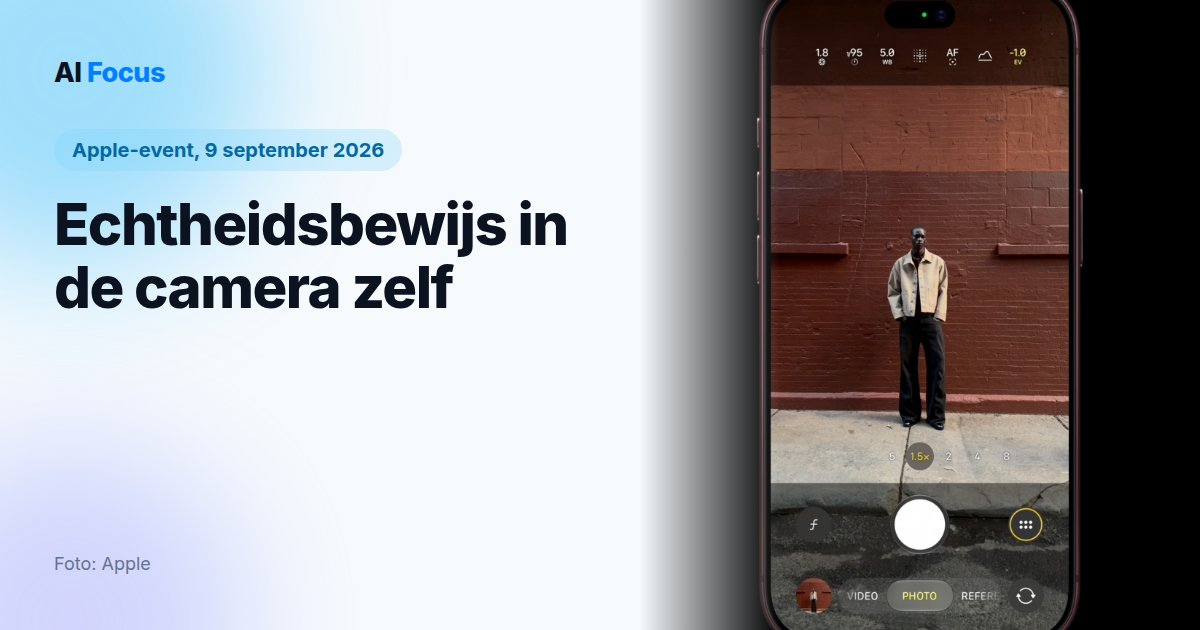
Apple Reference Image: Authenticity Proof Built into Your Camera
For years, the burden of proof ran one way: if you didn’t trust an image, you had to prove AI made it. Apple flips that. At its September 9, 2026 event, where it unveiled the iPhone 18 Pro and Pro Max, the company announced Apple Reference Image, a camera mode on the iPhone 18 Pro and Pro Max designed to prove a photo is real, not AI-generated, and unedited. TechCrunch, AppleInsider, 9to5Mac, and MacRumors covered the announcement the same day. Authenticity becomes a product that lives inside the camera itself. A powerful idea, with two catches, the biggest one landing right here in Europe.
A signature in the sensor, not pasted on top
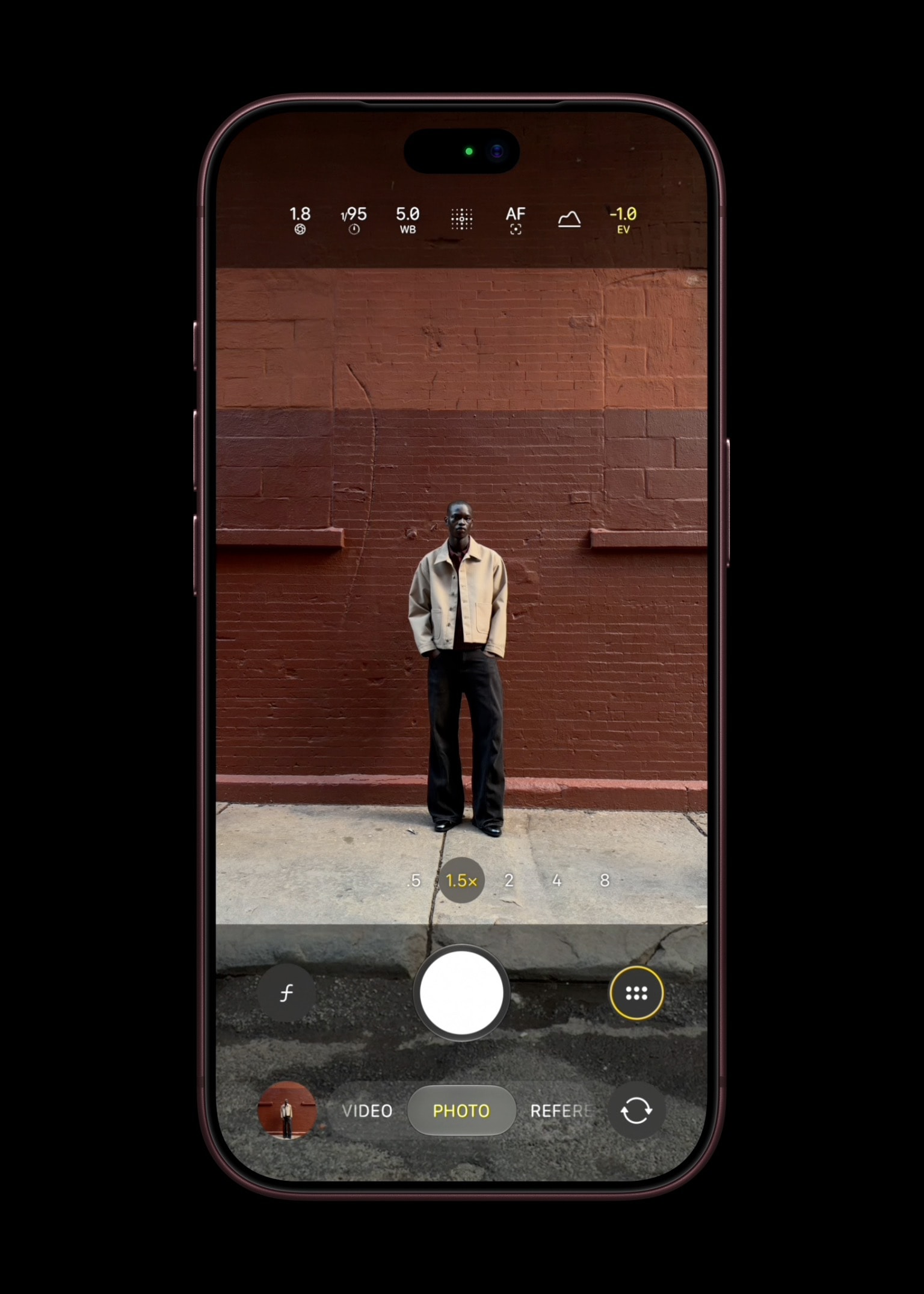
Reference Image is a separate capture mode you activate yourself, an opt-in feature; it’s off by default. Turn it on, and a new sensor in the main camera signs the image data at pixel level at the moment of capture. That signed data goes to Private Cloud Compute, Apple’s isolated server processing, which creates an unchangeable reference image from it, a kind of digital negative. That reference image appears in the Photos app next to your ordinary photo: if the photo diverges from it, something was edited on the way.
Apple keeps it from staying locked inside its own apps. iOS, iPadOS, and macOS 27 will get APIs, connectors that let third-party apps display reference images. And in reverse, Apple will label its own AI image features as AI later this year via a software update, using a marking based on SynthID, Google DeepMind’s invisible AI watermark.
The arms race shifts direction
Until now, everyone fought on the same front: detecting AI images. Detection tools, watermarks, source labels: SynthID, C2PA (an industry agreement to log where an image comes from in its file), and Meta’s Content Seal. They all answer: is this image fake? Apple asks the opposite question: is this image real, and can the camera itself prove it? Anyone who needs to prove their photo is not AI-generated will soon have an instrument that fits in their pocket. And it cannot come too soon: this week alone, a leak showed how attackers could eavesdrop on linked Gmail accounts through ChatGPT, proving you cannot simply trust what your screen shows.
What “authentic” actually means here
Still, read carefully what that signature proves. It proves an iPhone 18 Pro sensor saw these pixels at that moment, and nothing changed afterward. That is all. Someone who stages a misleading scene and then neatly photographs it in Reference mode gets a proper authenticity certificate for their deception.
| Question | Reference Image’s Answer |
|---|---|
| Did an iPhone 18 Pro capture these pixels? | Yes, the sensor signature proves it. |
| Was the photo edited afterward? | The reference image shows any differences. |
| Is what the photo shows actually true? | This system says nothing about that. |
Reports themselves say so: this helps journalists and researchers prove an iPhone captured the image, not that the photographed scene is unscripted or truthful.
In the EU: viewing allowed, capturing is not
The second catch hits you directly. In China, Reference Image is unavailable at launch because of “regulatory requirements.” But the EU’s core feature also stays locked: at launch, you cannot create reference images here. You can view them, and developers can build with them using iOS, iPadOS, and macOS 27, but the capture mode itself does not work here. No report explains why. For European readers, this is the bitter heart of the story: the authenticity proof will exist, but it will not come from your hands. You will be able to check other people’s reference images, but you cannot sign any of your own photos.
Why this approach is still the right one
To be fair: this is the strongest setup we have seen in this field. Anchoring in hardware is fundamentally more robust than a watermark added to a finished file after the fact: the signature is born with the image, not pasted on afterward. Apple also does not build its own island: by supporting SynthID, it connects to a standard that already exists, instead of adding yet another competing mark. And the fact that the mode is opt-in is more honest than silently signing every photo. During verification, your photo, the sensor signatures, the capture time window, and hardware identifiers go to Private Cloud Compute, isolated or not. You should make that choice, and if you have nothing to prove, you need not share anything.
What to do with this: know the timeline and reset your expectations. The iPhone 18 Pro opens for pre-order on Saturday, September 12, 2026, and lands in stores on Friday, September 18; iOS 27 drops Monday, September 14 as a free update. From then on, you can view reference images here too. But watch closely when Apple opens the capture mode in the EU. That day, authenticity proof becomes something you own, not something you can only admire in others.
Update September 10, 2026: Apple’s event brought more AI news. The biggest innovation, the new Siri powered by Google Gemini, will not reach the EU initially due to the DMA, and the Apple Watch now listens in too.