
What Does AI Cost a Business? Look at the Meter
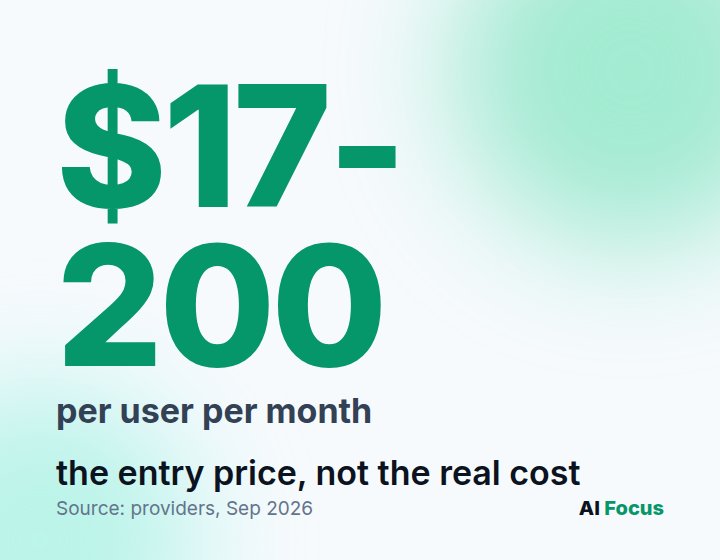
“What does AI cost a business?” is one of the questions you see typed most often today, yet rarely get an honest answer to. Usually you get a spreadsheet of subscription prices and call it a day. But that number, roughly $17 to $200 per user per month, is your ticket in. It is the start of the bill, not the end. If you only look at the subscription, you are asking the wrong question.
Because the price on the pricing page is the only piece that is fixed and visible. Everything else, and that is usually the bigger part, you discover only once you actually use AI. You hit a limit, your team loses time, or business information lands somewhere it should not. Let me unpack the three places where the real cost actually sits.
First, the Number That Is on the Box
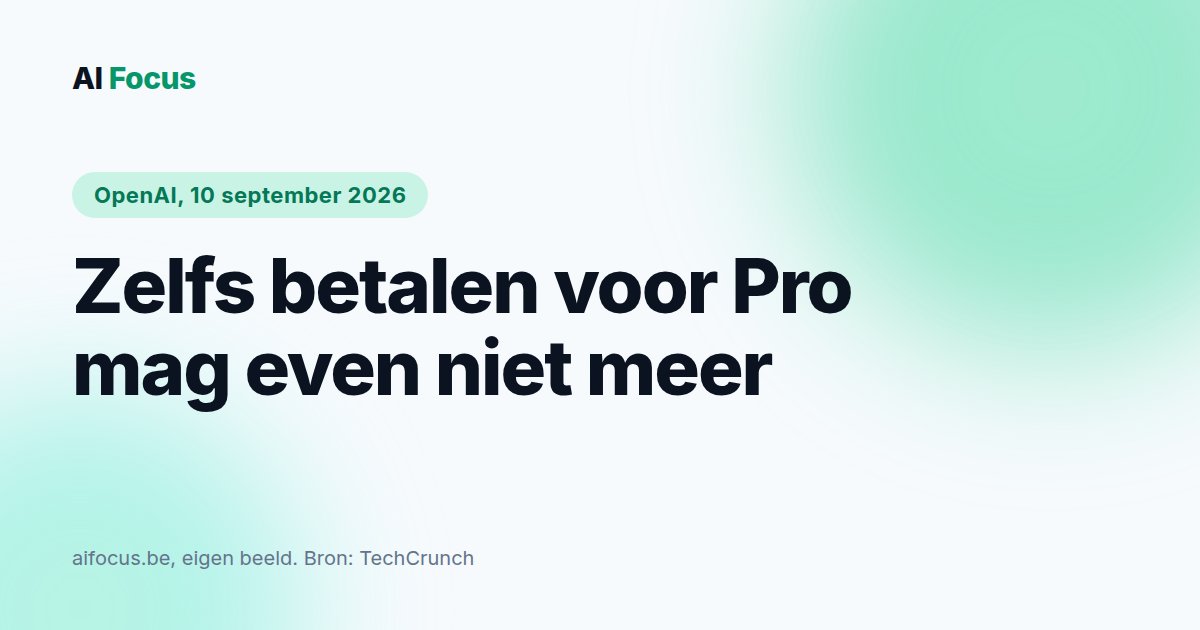
Let’s start with the figure that really is on the box. For an individual user, ChatGPT runs up to $200 per month for the Pro plan, so coveted that OpenAI temporarily stopped taking new customers for it in September 2026 due to capacity. Claude from Anthropic is cheaper at entry: Pro costs $17 per month on annual subscription or $20 month-to-month, and the pricier Max starts at $100 (the 5x tier) or $200 (the 20x tier). Gemini from Google is bundled for most businesses inside Google Workspace: if you already pay for that, AI is in your subscription.
For business, the picture shifts from “per person” to “per seat plus usage.” OpenAI’s Business Premium promises “5x more usage, no 5-hour limit”. Claude Enterprise starts at $20 per seat and then bills your usage on top at API rates, the price per unit of text processed. Gemini stays in the same logic: it comes in your Workspace subscription (AI Plus or AI Pro), you do not pay for it separately. Hold one thing in mind with each number below: these prices and limits shift every few months. What is true today may be different next quarter.
| Provider | Entry price (individual) | Business | Where the real cost lies |
|---|---|---|---|
| ChatGPT (OpenAI) | up to $200/month (Pro) | Business Premium: “5x more usage, no 5-hour limit” | message limits that can tighten |
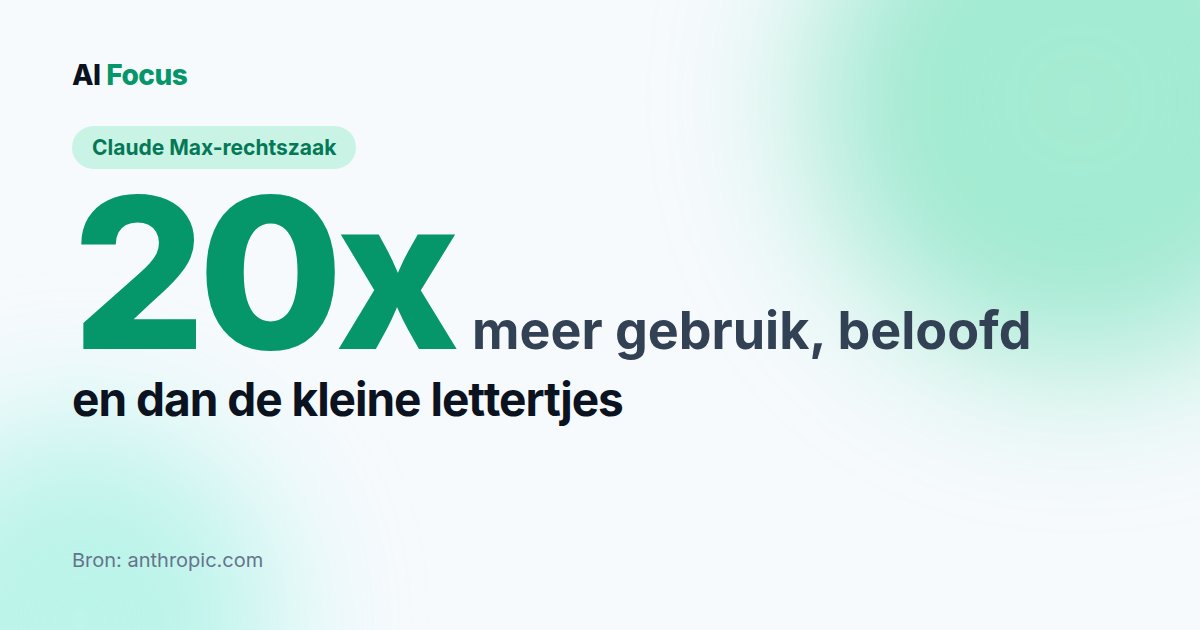
| Claude (Anthropic) | $17 to $20/month (Pro), Max from $100 | Enterprise from $20/seat plus usage | hidden weekly limit behind the 5x/20x promise |
| Gemini (Google) | bundled in Google Workspace | in your Workspace subscription | you pay via Workspace, not separately |
The Real Cost Lives on Your Meter, Not Your Invoice
This is where the trouble starts. What you buy with an AI subscription is not a fixed amount, but a meter you cannot see until it hits zero. Messages per hour, a five-hour window, a weekly cap across all models combined: these are the numbers that determine how much work you actually get done, and rarely do they appear big on the marketing page.
The price of AI is no longer on your invoice, it is on your meter.
That is not wordplay. When GPT-6 Astra launched, you suddenly got roughly half as many messages for the same money: the invoice stayed the same, the meter cut in half. And at Claude there is a class action lawsuit claiming the 5x and 20x multipliers on Max do not check out, and that the real ceiling is a hidden weekly limit that crushes heavy usage. Whether that lawsuit succeeds is for the courts to decide. But the pattern is clear: the number you pay and the number you get are two different things.
For a business, that means something simple: you cannot budget AI like a phone contract with a flat monthly fee. You budget it as consumption. Anyone who deploys it intensively, for coding work or for teams using it all day, hits limits they did not know existed, then either they buy more or the work stops.
The Hidden Costs: Time, Training, and Your Data
Alongside the meter are two costs on the bill that never literally appear on it. The first is time. Handing an AI subscription to your team is not the same as letting your team work with it. Time goes to learning where the tool can and cannot be trusted, to writing good prompts, and to fixing answers that sound convincing but are wrong. Those hours do not show up on any pricing page, yet they are real.
The second is your data. What you type into an AI tool can end up with third parties, and for a business that means checking the training policy and where your data goes. If someone dumps a customer list or a contract into a free chatbot, that could be a data breach with a GDPR price tag, not just a helpful summary. The business plans exist for this reason: they usually promise your input is not used to train models. That is not a detail, that is part of what you are paying for.
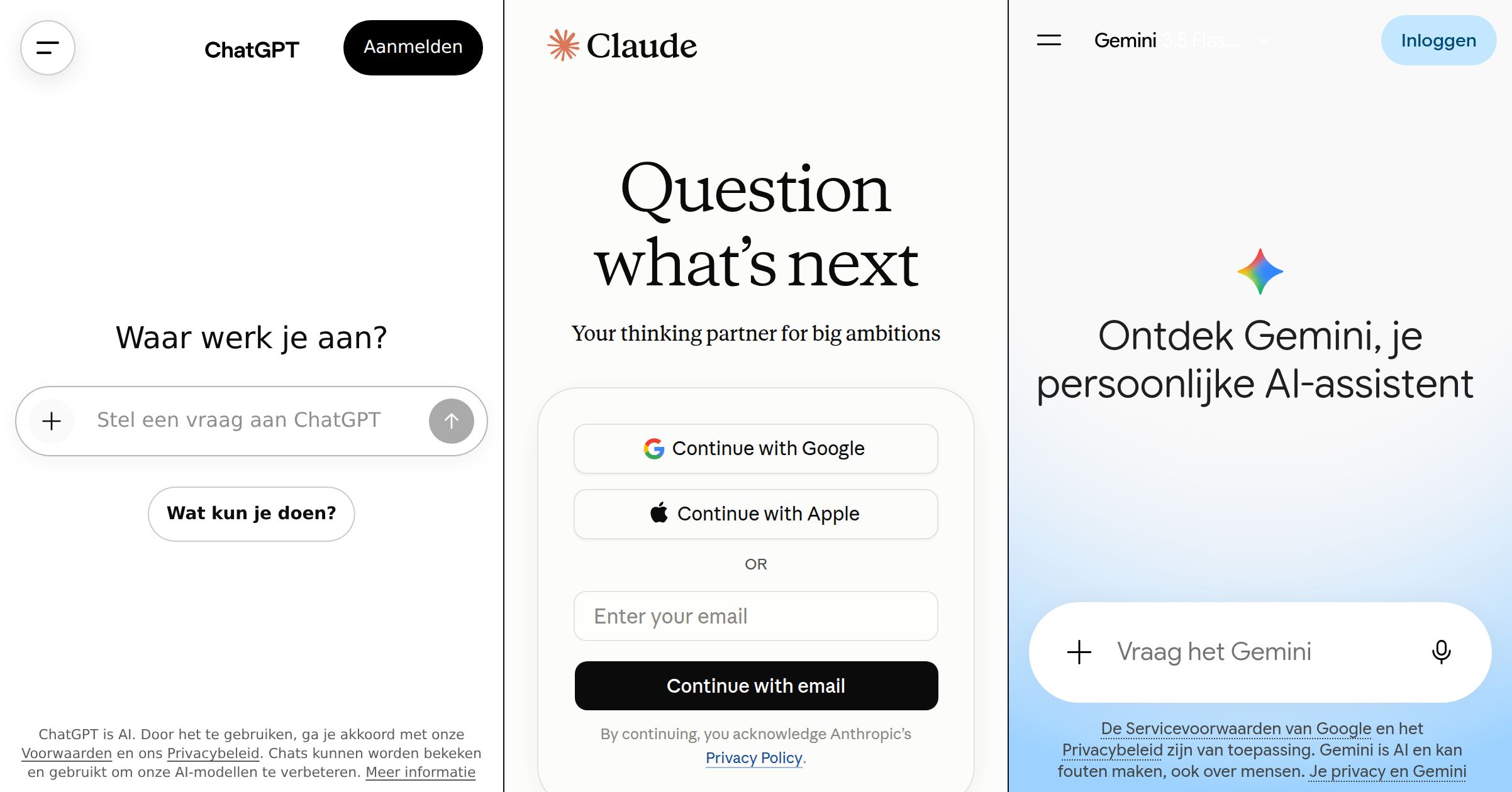
Which tool fits you best is a separate question; we cover that in our comparison of ChatGPT, Claude, and Gemini. This is about the lens through which you look at cost.
Concretely for a Flemish SMB: start small. Take one paid plan, let a handful of people work with it seriously for a month, and measure where they hit limits before you roll it out to everyone. Check the meter, not just the monthly price. And for anything sensitive, customer data, contracts, personnel records, use a business plan with a clear opt-out on training, or just keep it out of the chatbot. The question you ask your vendor is not “what does it cost per month”, but “what is the weekly limit and what happens to my data”. Those are the two numbers that actually shape your bill.
Update 21 September 2026: a concrete example of that calculation is in our first weekly review: what ActiveCampaign’s AI really does in email marketing, including what it costs and where it falls short.