Banning AI in the classroom backfires, study finds
Ban ChatGPT from the classroom and students perform worse on average. This isn’t the gut feeling of an enthusiastic tech teacher; it’s what a two-year experiment at Vrije Universiteit Amsterdam measured. And the nuance matters: the research didn’t just test “banning,” but three different approaches to working with AI, side by side.
The experiment comes from Thibault Schrepel, associate professor of law at VU Amsterdam and Faculty Affiliate at Stanford CodeX. He studied his own course on AI and law over two academic years. The study, “Generative AI in Legal Education: A Two-Year Experiment with ChatGPT,” appears as a preprint on SSRN and has since been peer-reviewed and published in the journal Law, Innovation and Technology (volume 18, issue 1, online since March 5, 2026). Peer review means colleagues vetted it before publication: not a guarantee of truth, but a meaningful threshold.
Three groups, one assignment
What makes this experiment stronger than the typical “we asked ChatGPT to…” anecdote? The three-arm design. Students worked in teams of four or five and had twenty minutes to rewrite provisions of the EU AI Act, the European regulation governing AI use. Each team operated under one of three rules.
| Approach | What students received | Outcome |
|---|---|---|
| Ban | No ChatGPT allowed | Finished last both years, ran out of ideas after 10-15 minutes |
| Free use | ChatGPT without instruction | Performed better than expected, slightly above the ban group |
| Structured training | Prompt engineering instruction | Best in 2024; in 2025 roughly equal to the other groups |
According to The Decoder, 66 students participated in 2024 and 164 in 2025, totaling 230. Enough to spot a pattern, too few to declare it law.
What the results showed
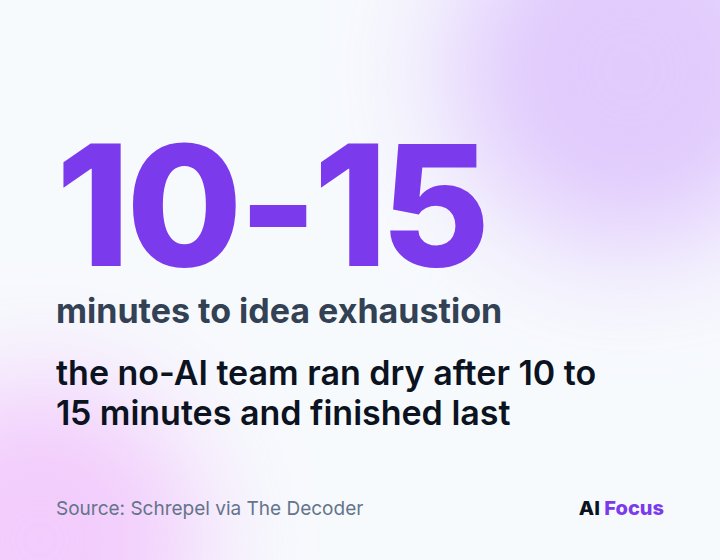
The ban group finished last both years. Without ChatGPT, students hit a wall after ten to fifteen minutes with no new ideas, what the study calls “idea exhaustion.” The trained group, which had received instruction in legal prompt engineering (the deliberate craft of asking AI the right questions), scored highest in 2024. But by year two, that edge had largely evaporated: all three groups performed roughly equally. Even the group using ChatGPT with no training did better than expected. Schrepel had predicted the opposite: “The opposite happened. The errors didn’t repeat, and the group actually scored slightly higher than the AI-free group.”
Two trends emerge. One is clear and held steady across both years: banning AI leaves students behind. The other is subtler: structured training helped initially but lost its edge as students picked up AI competence on their own.
Why both “ban it” and “leave them to figure it out” fall short
The school debate oscillates between two camps. One wants to keep AI out of the classroom, fearing lazy students and fabricated answers. The other shrugs: let them muddle through, they’ll learn. This study shows the first camp scores worst on average, while the second does better than expected, yet neither is a recipe for success.
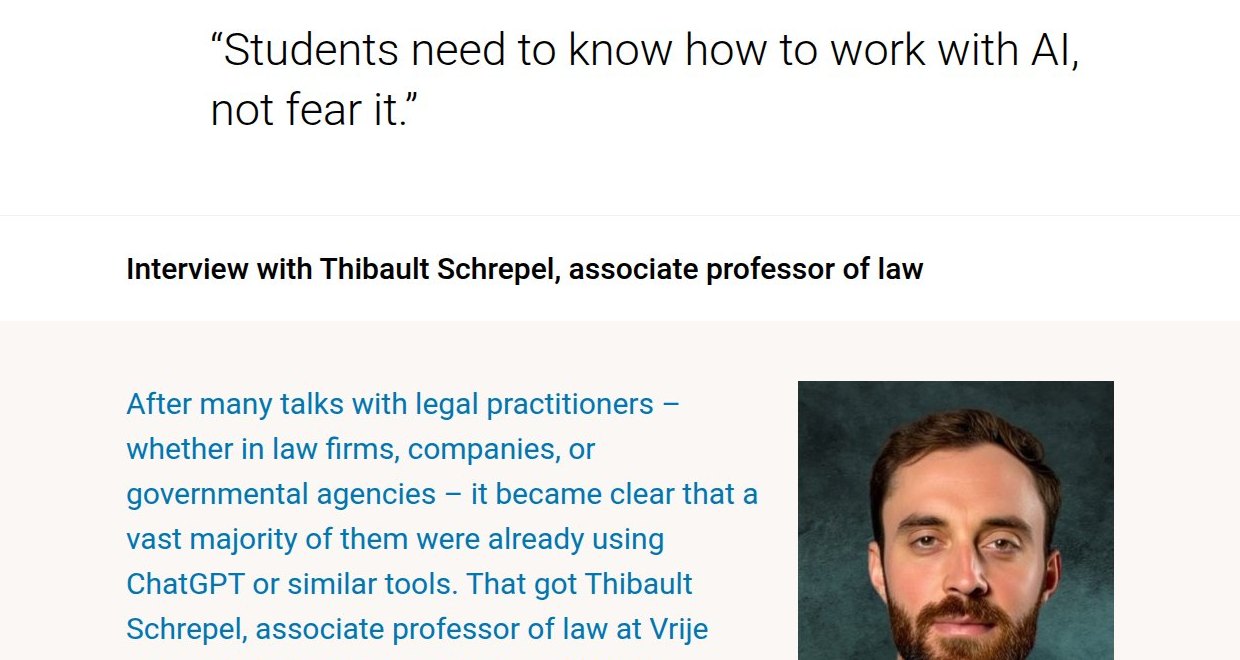
“Students need to know how to work with AI, not fear it.”
Students must learn to work with AI, not shrink from it, Schrepel says on the VU interview page. “If AI is becoming part of the legal world, my students need to be ready for it.” The real lesson lies in the second trend: learning how to deploy AI matters, but the window during which that gives you a decisive edge is closing as AI literacy becomes ordinary baseline knowledge. What is today a prompt engineering course will be what almost everyone already knows in a few years.
Fair limits to note: this is one instructor studying his own course, one law class, one type of task (legal rewriting), and a modest sample. It’s not the final word on education broadly. But the direction was consistent across two years, the study is peer-reviewed, and that carries more weight than another stray opinion in the faculty lounge.
For schools and students, the practical takeaway is clear. Banning is now the hardest position to defend: you’re depriving students of skills they’ll need everywhere. “Learn prompt engineering” is no longer a magic bullet but increasingly table stakes, the way learning to Google once was. If you’re starting out, deliberately choose which chatbot fits your needs best and keep an eye on how to use AI responsibly and with privacy in mind from day one. The question is no longer whether AI belongs in the classroom, but how to teach students to use it wisely.