AI Voice CEO Fraud: Bank Wires 95 Million to Scammers
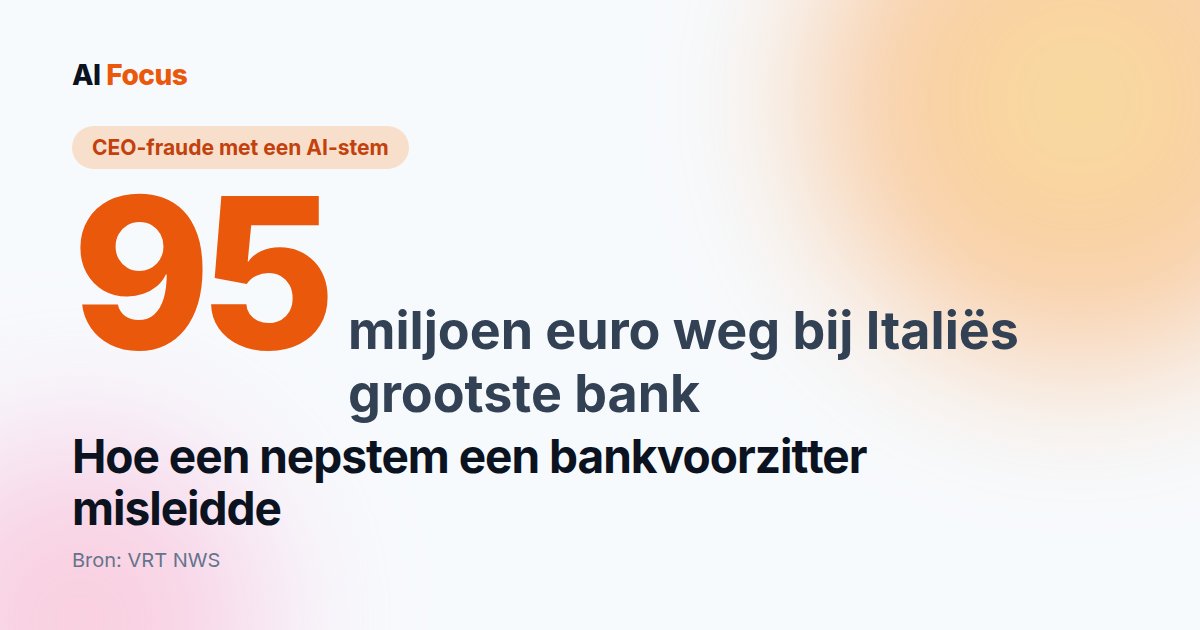
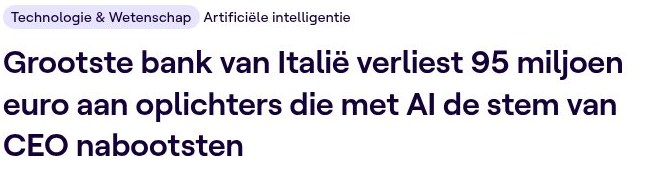
Intesa Sanpaolo, Italy’s largest bank, fell victim to CEO fraud in which an AI-imitated voice played a role. Scammers made off with roughly 95 million euros from Fideuram, the group’s private banking arm, which also operates in Belgium. VRT NWS reported this on 25 September 2026, based on Italian news sources. The striking detail: nothing was hacked. A WhatsApp message and a phone call were enough.
What Happened
The fraud took place in February 2026. The scammers contacted Paolo Molesini, chairman of Fideuram, via WhatsApp and impersonated Carlo Messina, CEO of Intesa Sanpaolo. The message: an urgent international transaction was underway and the CEO needed help.
A phone call followed. According to Italian news sources, the scammers used AI to mimic the voice of a prominent lawyer specializing in venture capital. One detail worth noting: the VRT headline mentions “the CEO’s voice,” but the article text has the CEO appear via WhatsApp and names the lawyer’s voice as the AI voice. Italian media do not all tell the same story either. For the lesson, it makes little difference. What matters is two channels that confirmed each other, and both were fake.
Molesini, believing he was acting on orders from the bank’s top management, then approved international transfers totalling roughly 95 million euros, mostly to accounts in China and Hong Kong.
| Step | What Happened |
|---|---|
| 1. WhatsApp as CEO | Scammers pose as CEO Carlo Messina via WhatsApp and request urgent help with a foreign transaction. |
| 2. Phone Call with AI Voice | A phone call using an AI-imitated voice of a well-known venture capital lawyer (according to Italian sources). |
| 3. Transfers | The chairman of Fideuram approves international payments of roughly 95 million euros, mostly to China and Hong Kong. |
| 4. Detection | Fideuram notices irregularities quickly and alerts authorities and banks. |
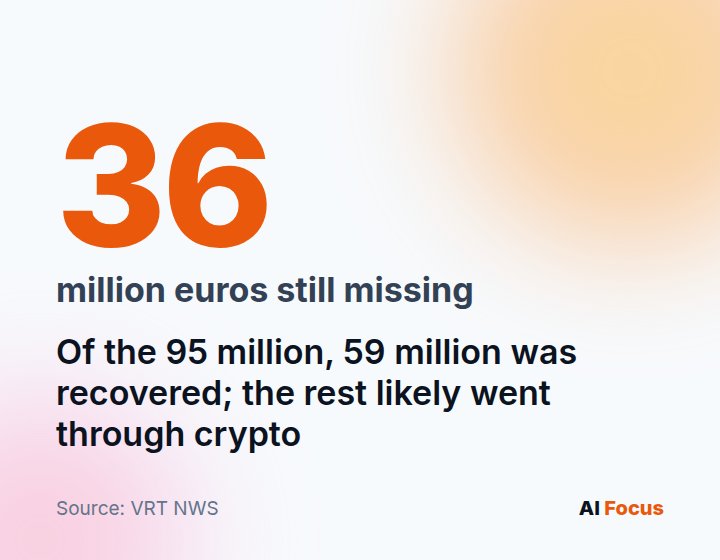
| 5. Recovery | 59 million euros is recovered. Roughly 36 million remains missing, presumably converted to crypto via foreign accounts. |
In March, one month after the fraud, Molesini resigned. Fideuram gave no further explanation at the time; the departure was said to be for personal reasons. According to Italian sources, neither he nor other executives are under investigation. The Milan prosecutor’s office has reportedly opened an investigation into a suspect outside Europe for computer fraud. The investigation into the missing money continues. Note: the figures above come from the VRT report; Italian media cite partly different numbers for what was recovered and what remains missing.
No Hack, but a Chain of Trust
Intesa Sanpaolo clarified that its IT systems were never hacked. This is precisely what makes the story so instructive. There was no firewall to breach, no password to steal. The attackers targeted something else: the instinct to help quickly when someone higher in the hierarchy asks.
It is not an isolated case. The bank’s security chief says the bank sees CEO fraud attempts very often. Since the start of this year, the bank has reportedly identified and removed some 5,000 fake videos made with AI, often featuring CEO Messina.
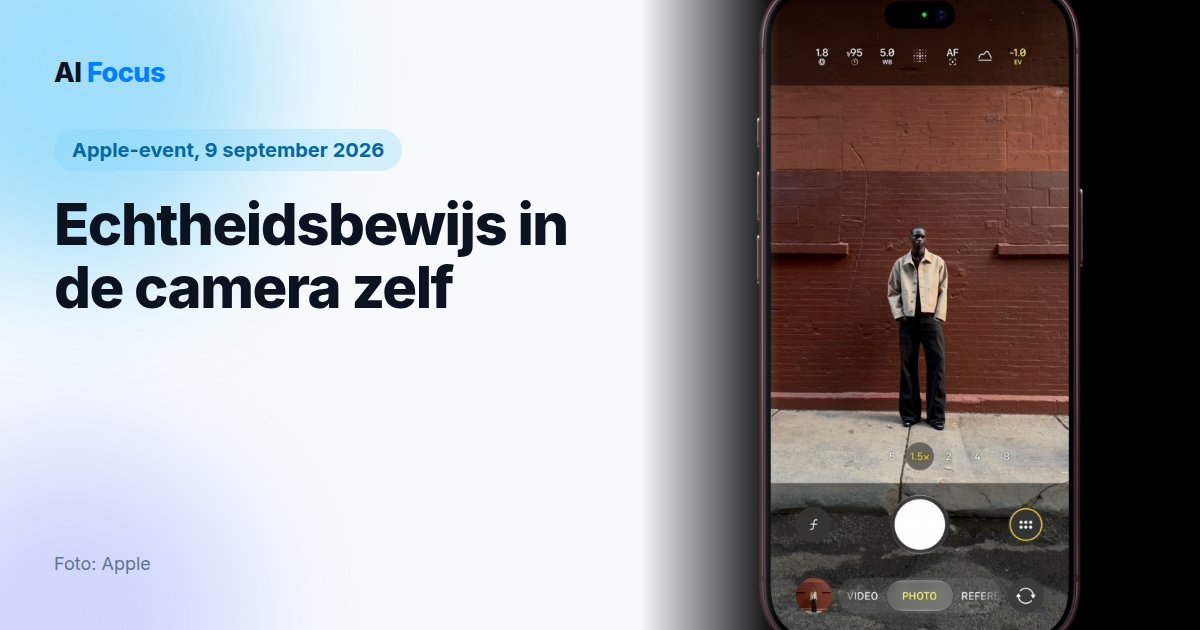
This fits a broader pattern: AI makes it cheap and fast to imitate a voice, a face, or a writing style. We have written before about how the bar for attackers drops when AI acts as a hacker. On the other hand, you see the reverse movement: technology that must prove what is real, such as Apple’s proof of authenticity in the camera. But until such systems become standard everywhere, you must assume that a voice or a message by itself proves nothing.
How to Protect Your Business
The good news: the defence against this kind of fraud is neither technical nor expensive. It is procedural. A few rules that everyone knows and no one is allowed to skip:
- Call back using a known number. If you get a payment request by phone, email, or chat, hang up and call back yourself using the number already in your systems. Never call the number the caller gives you.
- Two approvals for large or urgent payments. Set a rule that payments above a certain amount, or to an unusual destination, must always be approved by a second person.
- An agreed code word. Agree with management and finance staff on a code word that never circulates digitally. Anyone who does not know it gets no payment.
- Never pay based on WhatsApp or a phone call alone. A chat message or a trusted voice is no longer proof today. A payment always goes through the normal, written process.
- Pressure and secrecy are a red flag. “It has to be done today” and “tell no one” are exactly the phrases scammers use to get around your procedure. The more urgent it sounds, the slower you should move.
- Report it. If you doubt a message or have been duped, report it. In Belgium, you can contact the Centre for Cybersecurity Belgium via safeonweb.be. If a payment has been made, also notify your bank immediately: the faster you act, the greater the chance of recovery, as Fideuram showed.
Write these rules down, just as you do for other business procedures around AI, such as GDPR and privacy. And test them occasionally: a rule no one knows protects no one.
Our Take
The weak link at Fideuram was not an IT system, but a chain of trust. A WhatsApp message and a voice were enough, and in a bank no less, a sector built on controls. AI makes forgery cheap and convincing, and there is no going back.
So the defence is not better software, but better habits: call back, two approvals, a code word. If it works on Italy’s largest bank, it will certainly work on a Flemish SME. The cheapest protection is a rule that no one is allowed to skip, not even the boss. Especially not the boss, because that is the person the scammers impersonate.