A Human May Be Reading Your ChatGPT Conversation
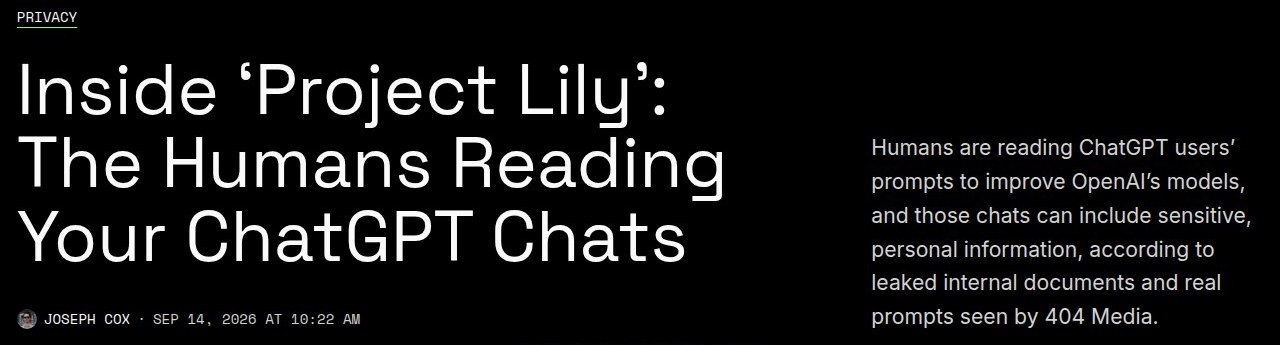
A real person can read along with what you tell ChatGPT. Not your neighbor, but a paid contract worker who sees your conversation as training material. That is what 404 Media reported on September 14, 2026, based on leaked internal documents and sources: OpenAI has hundreds of contract workers reading and evaluating real ChatGPT conversations. The Decoder summarized the investigation.
For those who feel alarmed: this is not a breach and not a data leak. It is largely just how these models get refined. But how OpenAI arranged and disclosed it deserves a critical look.
What Those Reviewers Actually Do
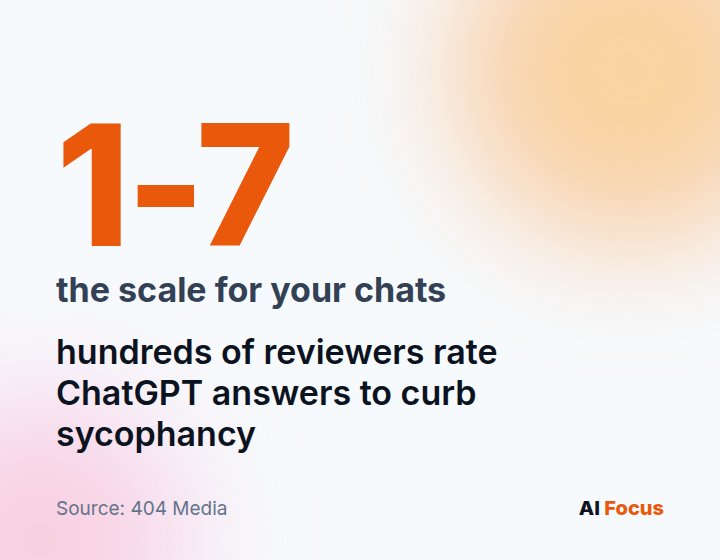
The conversations reviewers see are anonymized. Yet OpenAI itself acknowledges that this privacy filter “can make mistakes,” meaning it can fail. In other words, sensitive personal data could slip through to someone you never chose. The reviewers score ChatGPT’s answers on a scale of 1 to 7, with a strikingly specific task: reduce “excessive flattery and human-like behavior.” That is also precisely why ChatGPT does not constantly praise how brilliant your questions are: people steer that deliberately.
These workers are not OpenAI employees. They are recruited through a firm called Crossing Hurdles and paid through the training platform Mercor. One reviewer in North America reported earning over $50 per hour. In short, it is an organized, paid review layer on top of the chatbot.
This has a name: RLHF, or reinforcement learning from human feedback. It amounts to people rating a model’s answers so the model can be tuned based on those ratings. Without that human layer, such a model stays rough, sycophantic, or simply unreliable. Anthropic does it with Claude, Google does it with Gemini, and OpenAI does it too. There is nothing exotic or secret about the principle itself.
Normal Work, Quietly Buried
Yet something still feels off. If human review is so normal and necessary, why is it hidden so well? OpenAI mentions this practice only in an obscure FAQ page that has existed since at least 2023, in vague language:
“Authorized personnel and service providers may view user data.”
Authorized staff and service providers can view user data, it says, under the equally vague banner that it serves to “improve the model for everyone.” No separate notification, no explicit consent, no moment when you actively hear that a stranger might read your conversation. You were just supposed to know.
That is the real sore point, and it is one we see often with AI services. You entrust your question to a brand, and the brand decides without you what happens to it and who sees it. We wrote earlier about a leak where attackers could read into linked accounts and about how your data sometimes ends up where you don’t expect it. Different mechanism, same underlying problem: the label on the box does not tell you what happens to your words inside.
What You Can Do About It
Our view is straightforward. The problem is not that people look in, because they must or no one tames such a model. The problem is that you did not know. The practical conclusion is therefore simple, and without panic: treat a chatbot as a channel where in principle a stranger can read along, especially with business or sensitive information.
Concretely, you should turn on the training opt-out in your settings so your conversations are not used as training material, or choose a business plan with stricter data rules. And the simplest rule of all: type nothing in a consumer chatbot that should not reach an unknown reviewer. We worked out how to use AI responsibly and with privacy in mind in a separate guide.
Stay honest about the scale too. Human review is necessary and entirely normal, and a few hundred paid, trained reviewers scoring anonymized fragments is something very different from “everyone reads your diary.” Do not overstate the threat. The complaint against OpenAI is not that people look in, but that the company let you find out via a leaked document instead of simply telling you.